

Planner
Month/week calendar, categories, best-time queues, bulk CSV, evergreen slots, hashtag sets, link shortener, RSS.
🎩 For in-house managers
Most social media manager software assumes a team. The in-house reality is usually you: producer at nine, support desk at eleven, analyst at two, request handler at four. Nimply is built for that job description — a planner, a unified inbox, approval rails, and AI agents that give every hat a counterpart.
A day in the seat
The job isn’t hard because any one task is hard. It’s hard because the context switch never stops. Here’s the day, hour by hour — and what picks up each hat when you put it down.
9:00
Write, design, caption, and slot this week's posts — for every platform, in every format.
The planner holds the week: categories, best-time queues, hashtag sets, evergreen slots. The Content Repurposer agent turns one strong piece into native drafts per platform, so you produce once and review many. Content Repurposer agent →
11:00
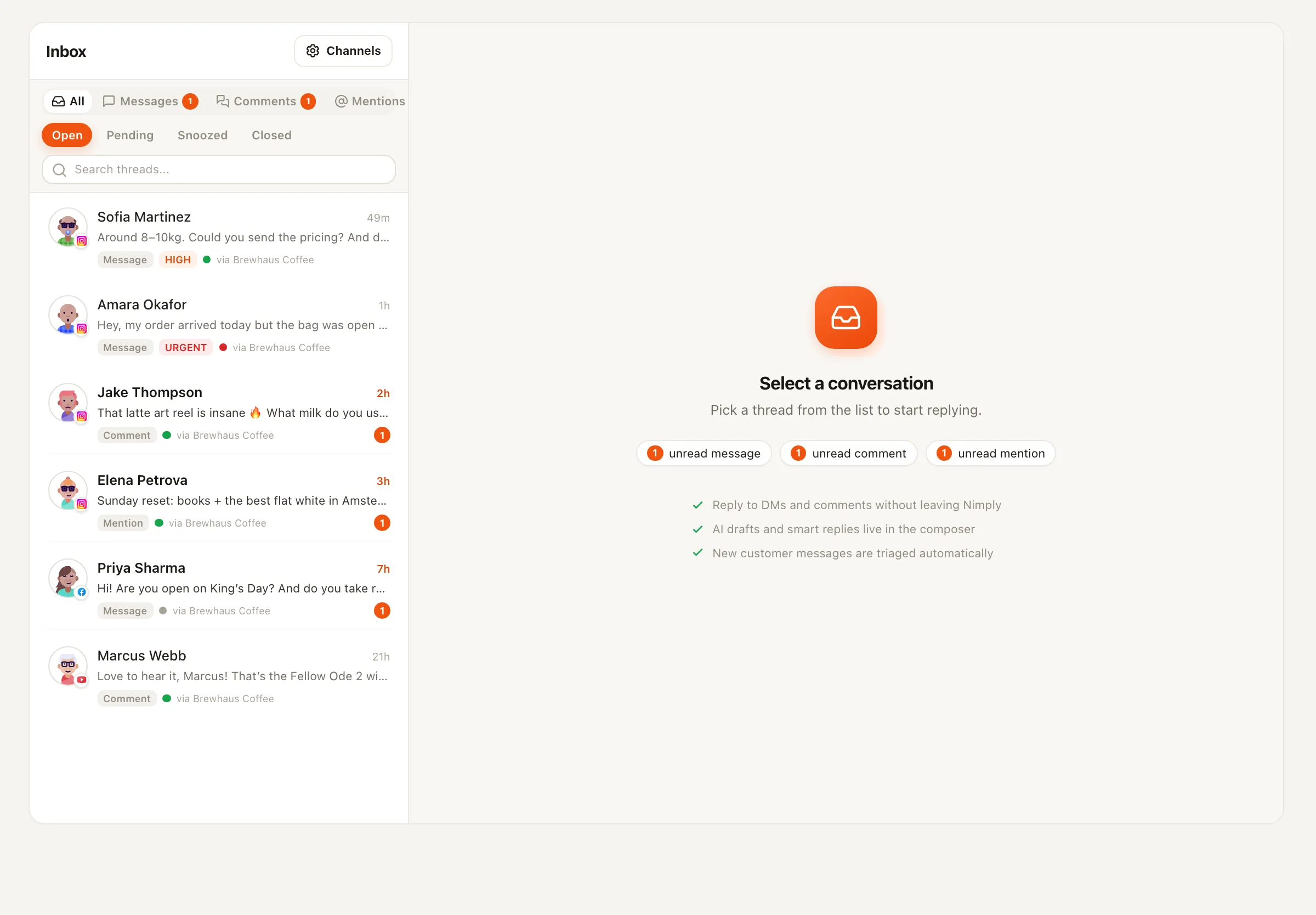
Comments and DMs from three platforms, each in its own tab, each judging your response time.
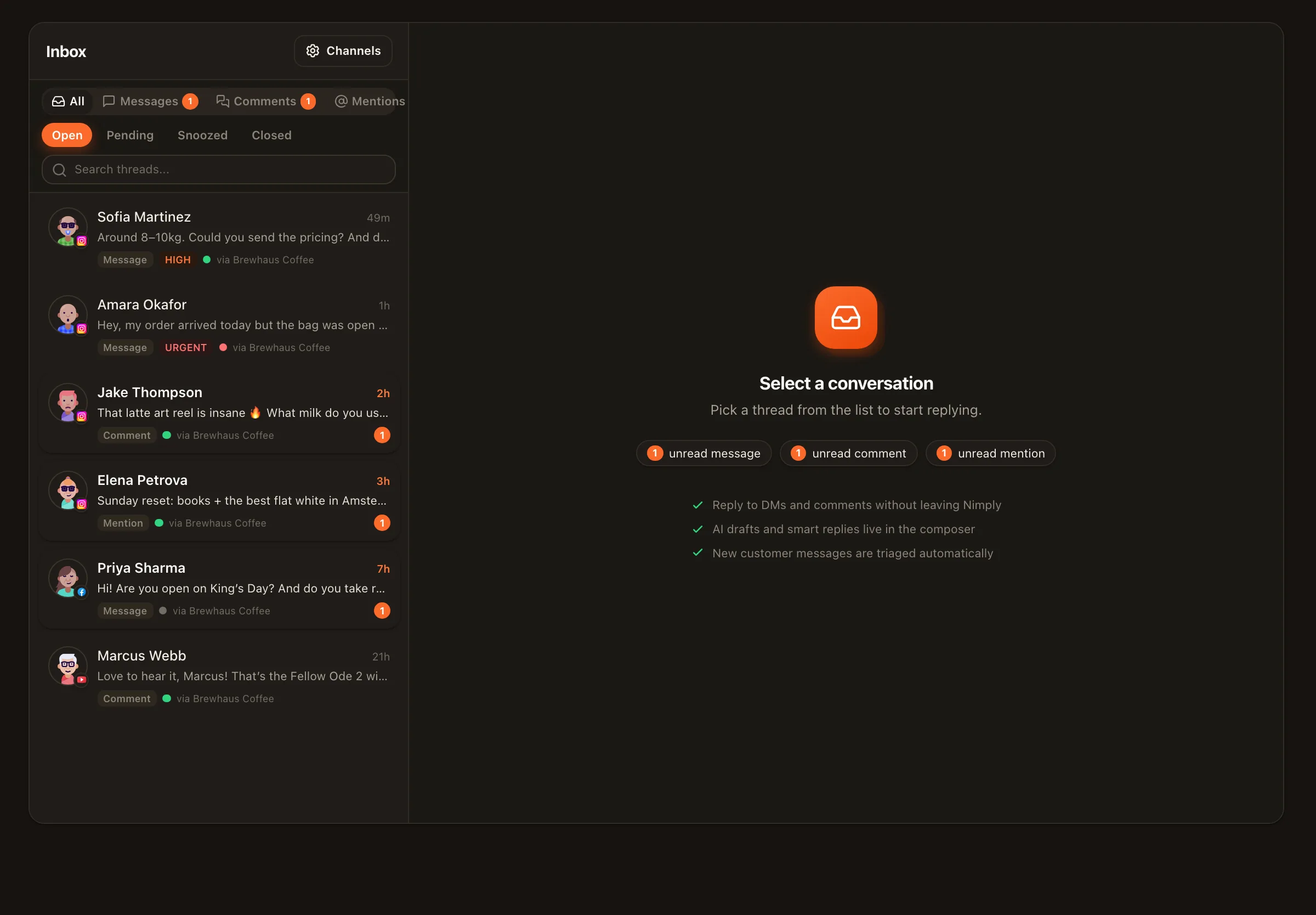
The unified inbox pulls Facebook and Instagram comments and DMs — plus YouTube comments — into one triaged queue with SLA timers, assignment rules, saved replies, and AI-drafted responses waiting for your send. Inbox management →
14:00
Someone upstairs wants numbers that prove social is working — by end of day.
Built-in analytics are YouTube-first today (we say that plainly), and structured reporting workflows help you turn whatever real numbers you have into a narrative leadership can read. Social media reporting →
16:00
Sales wants a launch post, HR wants a hiring post, legal wants last week's post edited.
Requests become drafts in one shared calendar with an approval workflow — stakeholders see status instead of pinging you, and nothing publishes until it's signed off. Team collaboration →
The extra pair of hands
Hiring headcount for social is a budget conversation you’ve probably already lost once. Hiring agents isn’t: the Customer Support agent drafts replies in your inbox, the Community Moderator watches the comment sections, and the Trend Scout files sourced post angles so the calendar never starts blank.
No agent publishes or replies directly. Everything lands in your queue as a draft — approval is a click, but it's always your click.
Every agent run shows its credit cost, so 'what does the AI cost us' has an answer when finance asks.
The draft → pending approval → scheduled rail means a second set of eyes — yours or your manager's — is built into the pipeline, not bolted on.
One login, one context
The hidden cost of the seven-hat day is the stack behind it — a scheduler here, an engagement tool there, an AI subscription somewhere else. Consolidating the tools for social media managers into one system isn’t just cheaper; it means the pieces share context.
Month/week calendar, categories, best-time queues, bulk CSV, evergreen slots, hashtag sets, link shortener, RSS.
FB/IG/YouTube comments and DMs with AI triage, SLA policies, saved replies, and per-thread agent pause.
Comment-to-DM, AI inbox classification, scheduled agent runs, Slack/Telegram notifications — with test simulation before anything goes live.
Support, moderation, repurposing, recycling, trend scouting, carousels — hired per need, drafting on rails.
The workflow is built for exactly your situation: one accountable human, many hands wanted. The planner, unified inbox, and AI agents run fine solo — and roles (OWNER, ADMIN, EDITOR, VIEWER) are there for the day a stakeholder, intern, or agency partner needs scoped access.
Every post moves draft → pending approval → scheduled. You can require sign-off from a manager or legal before anything publishes, and AI agents can never skip the rail — they only ever produce drafts. For a brand account, that's the difference between fast and reckless.
Facebook and Instagram comments and DMs plus YouTube comments today, with more platforms as API approvals land. It's opt-in per channel, and includes AI triage, SLA policies, assignment rules, saved replies, and AI-drafted replies you review before sending.
The repetitive layer: drafting replies to common comments and DMs, moderation flags, repurposing one piece across platforms, resurfacing evergreen posts, sourcing trend angles, carousel drafts. Every output lands in your queue as a draft — you stay the voice of the brand.
Yes, per thread. If a complaint turns serious or a journalist slides into the DMs, pause the agent on that conversation and handle it yourself — the agent stays active everywhere else.
Typically a scheduler, a separate inbox or engagement tool, an AI writing subscription, a link shortener, and the spreadsheet where hashtag sets live. In Nimply they're one system that shares context — the planner knows what the inbox knows.
Keep strategy, voice, and the final say. Hand the repetitive layer to a planner, an inbox, and an agent bench that drafts while you decide.