

Planning & workflow
The content approval workflow nothing sneaks past
Plan campaigns on Kanban boards, then move every post through draft → approval → scheduled. Editors create, approvers sign off, and only approved content reaches the calendar — whether a human wrote it or an AI agent drafted it.
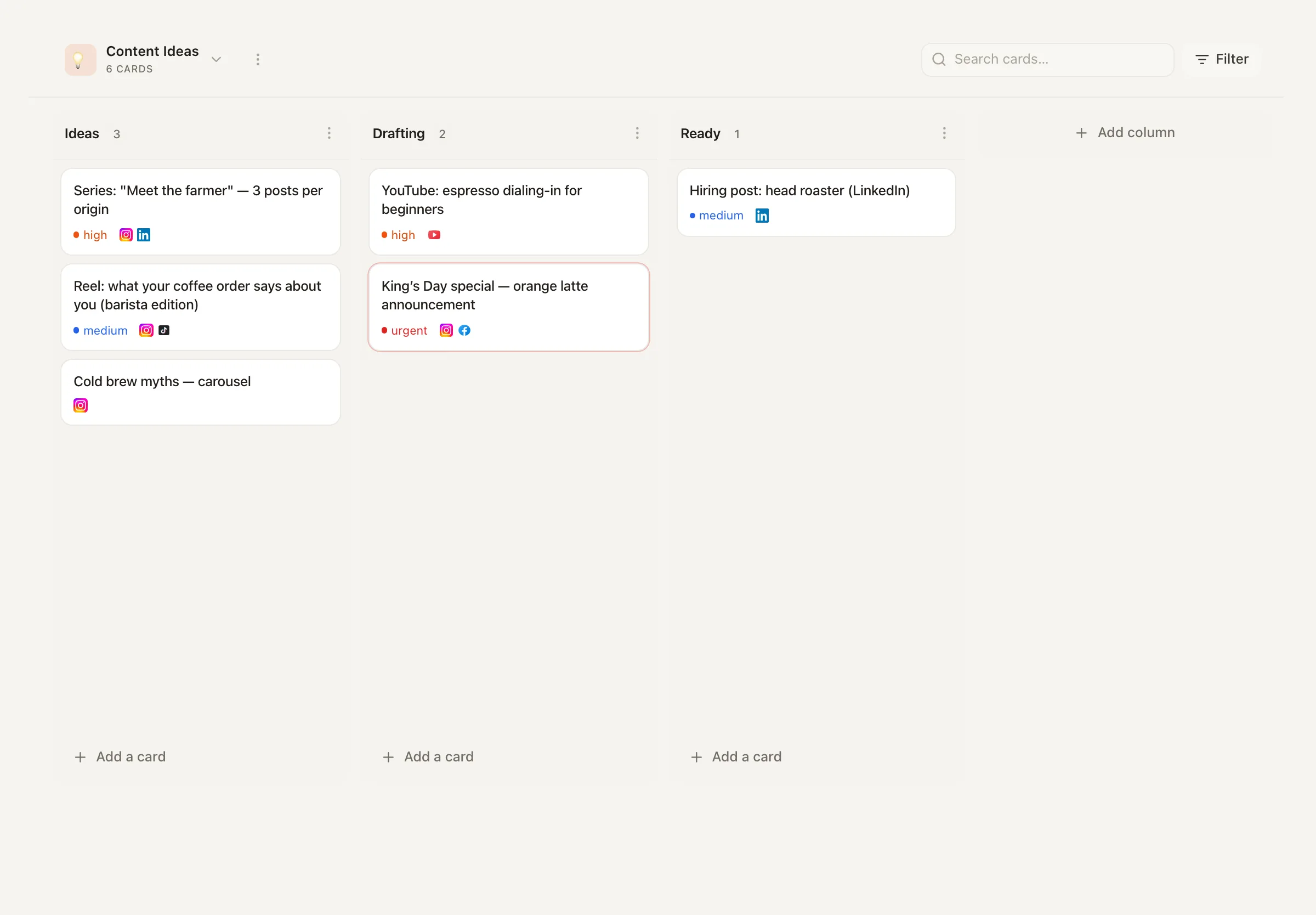
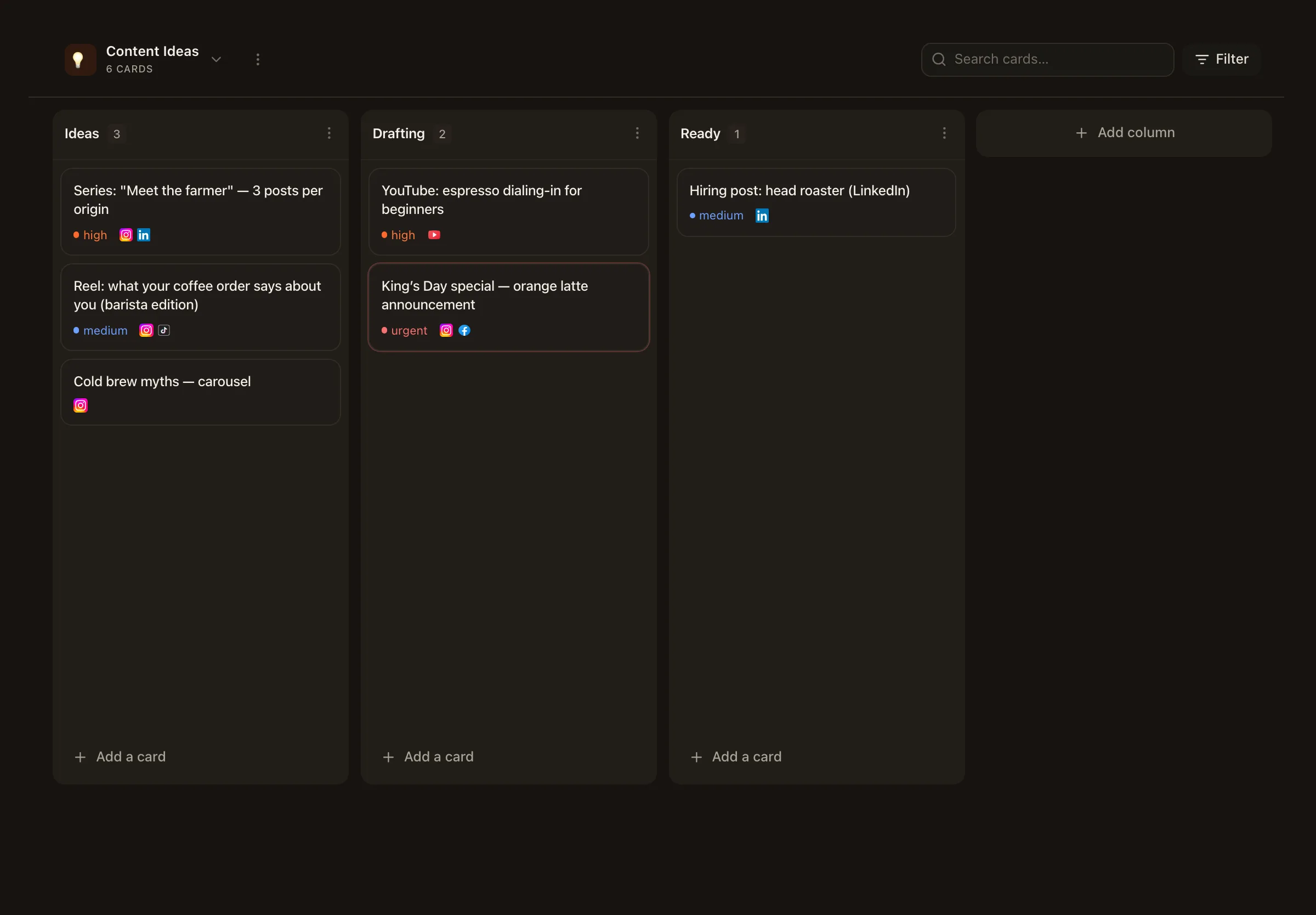
The pipeline
Four states. One rule: no approval, no publish.
Every post in Nimply carries an explicit status, so “where is that post?” is a glance, not a Slack thread.
- Draft
Where every post starts — written by you, a teammate, or an AI agent. Unfinished work stays safely unpublishable.
- Awaiting approval
The gate. A reviewer reads the post, checks the media, and signs off — or sends it back. Nothing passes without a decision.
- Scheduled
Approved posts get a slot on the calendar. From here, publishing is automatic — no one has to be online at post time.
- Published
Live on the platform, visible on the calendar, and clearly marked — so the board always reflects reality.
Plan the work
Social media content planning that survives Monday
Map out campaigns before anyone writes a caption. Ideas and posts live as cards on a board, so the plan is something the whole team can see and move — not a spreadsheet someone forgot to update.
Kanban boards for campaigns
Organize ideas and posts into clear stages and drag cards along as work progresses — the whole pipeline visible in one view.
Assign work to the right people
Give teammates ownership of specific posts and campaigns, so everyone knows exactly what's theirs.
Status you can read at a glance
See which posts are drafts, awaiting approval, scheduled, or published — without opening a single one.
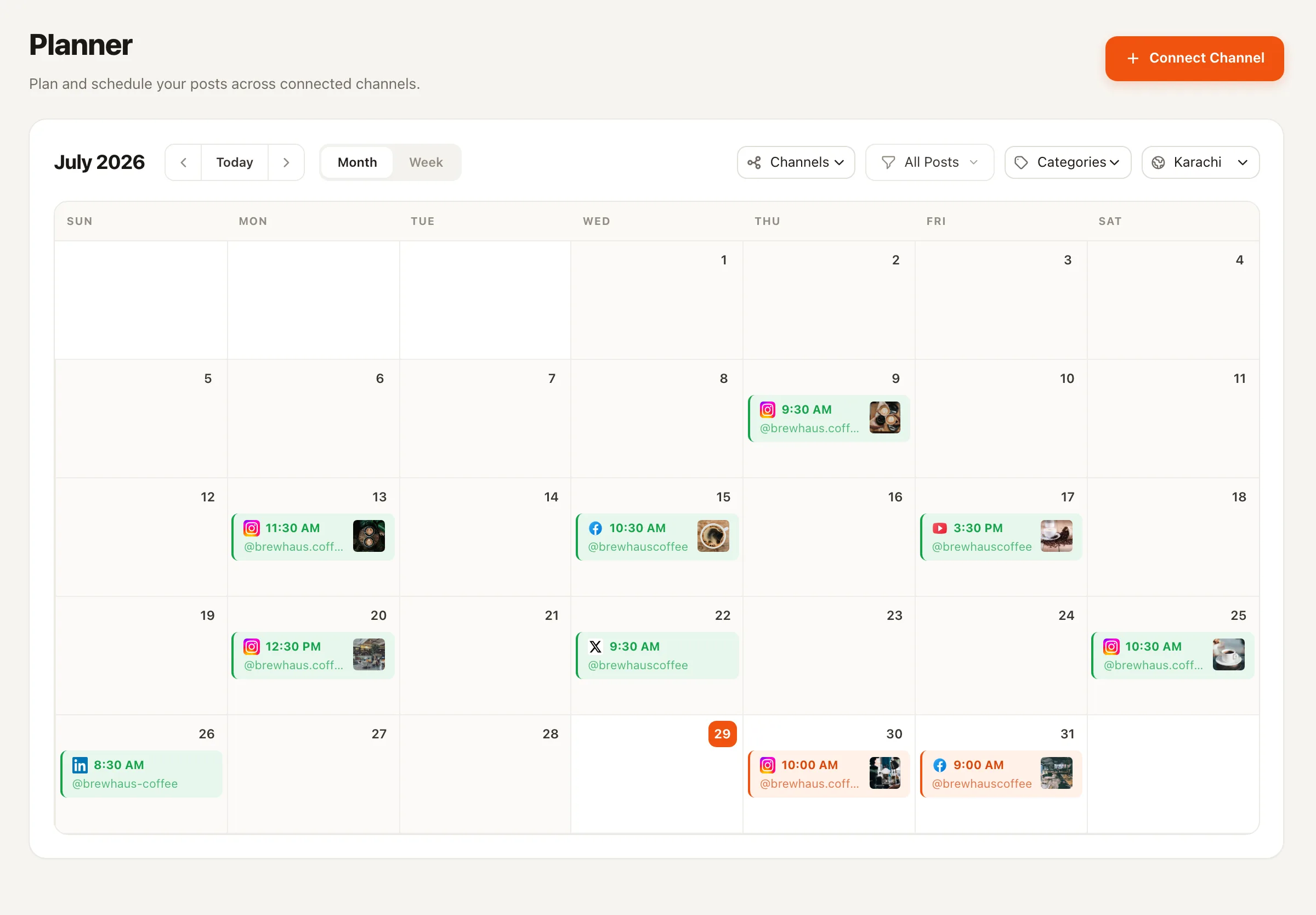
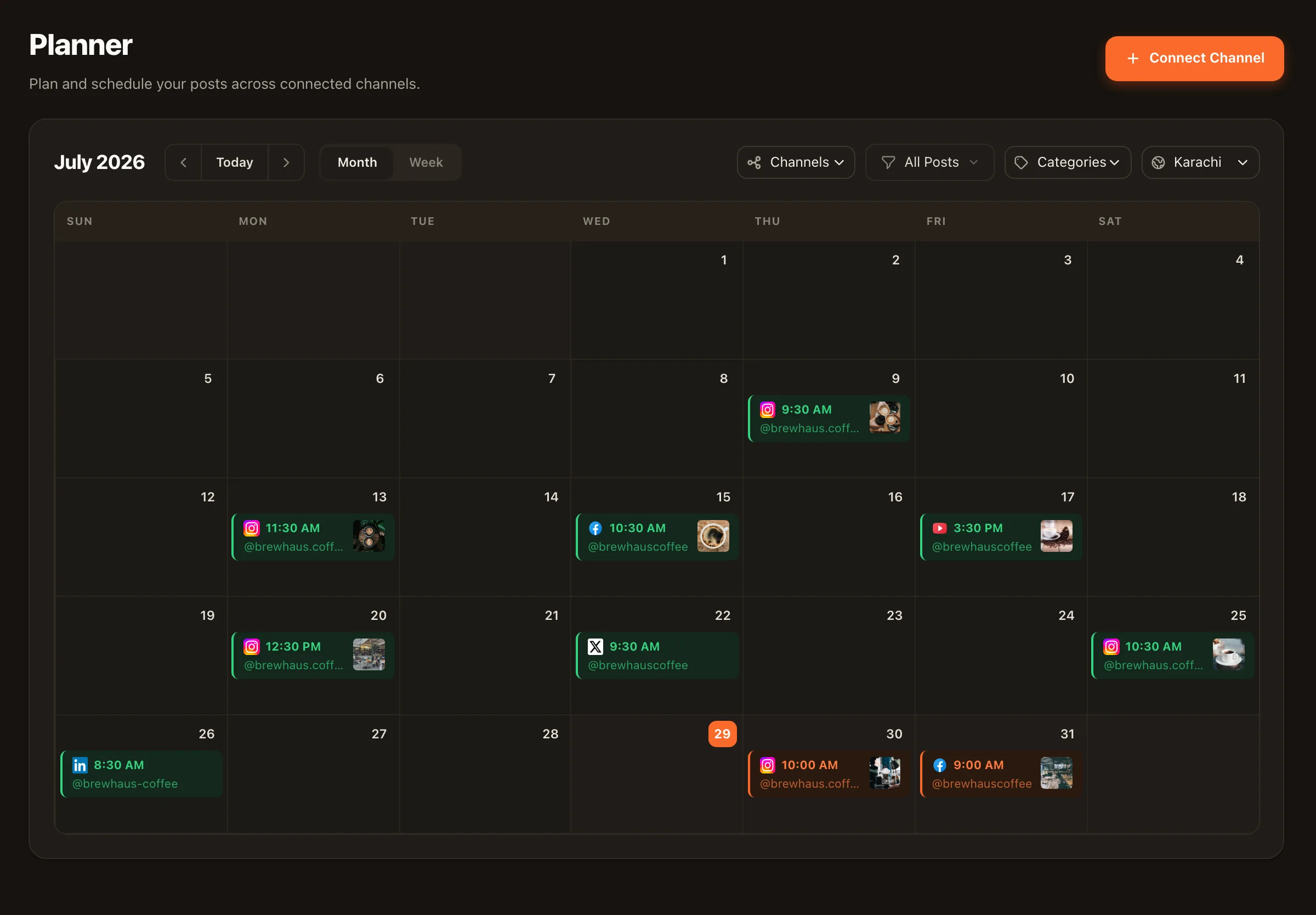
Approved posts flow straight onto the calendar — planning and publishing are one pipeline, not two tools.
Why this gate matters more now
The approval gate is what makes AI agents safe
Nimply’s AI agents draft posts, and automations create drafts on triggers and schedules — but none of them can publish. Their work arrives in this pipeline and waits at the same approval gate as everything else. The workflow you’d want for a junior teammate turns out to be exactly the rail an AI workforce needs.
Nothing slips through
An approval step means off-brand or unfinished posts never go live by accident — whoever, or whatever, wrote them.
Agent drafts wait here
AI agents deliver drafts into the pipeline, never to the platforms. You review, approve, and only then does anything get scheduled.
Clear team accountability
Assigned work and visible stages keep everyone aligned on who's doing what — and who signed off on what went out.
Ideal for regulated brands
Sign-off before publishing suits teams, client work, and industries where an unreviewed post is a genuine liability.
For agencies and client teams
Give clients a real review step, not a screenshot thread
Route client content through the approval gate so sign-off happens where the content lives. Once approved, posts are scheduled and published automatically — and if they spark conversations, the unified inbox catches the replies in the same workspace.
Content approval workflow — frequently asked questions
How does the content approval workflow work?
Every post moves through draft → approval → scheduled. Editors create content, approvers review and sign off, and only approved posts get scheduled and published. Nothing reaches your audience without an explicit yes.
Can anything publish without approval?
No — that's the point of the gate. A post can't be scheduled until it's been approved, and that applies to everything in the pipeline: posts your team writes, and drafts produced by AI agents or automations.
Do AI agent drafts go through the same approval?
Yes. Nimply's AI agents never publish directly — everything they produce arrives as a draft in this same pipeline and waits at the approval gate like any teammate's work. That single rule is what makes running agents safe.
Can I assign posts to teammates?
Yes. Assign specific posts and campaigns to team members so ownership is always clear, and use the Kanban board to see who's working on what and where each piece stands.
Is this good for agencies and client work?
Yes. The approval step gives clients a clean way to review and sign off before anything reaches their audience, and Kanban planning keeps each campaign's status visible — especially alongside Nimply's workspaces and roles.
What happens after a post is approved?
It flows straight into scheduling. Planning and publishing live in the same tool, so an approved post gets its calendar slot immediately and Nimply publishes it automatically at that time.
Put an approval gate in front of your feed
Start free — map your pipeline on a board, route posts through review, and publish only what's been signed off.