

✍️ Nimply for Ghostwriters
The LinkedIn ghostwriting workflow, systematized
You already run a studio: capture the client’s voice, draft on their cadence, get sign-off, ship on schedule. Nimply doesn’t replace that craft — it’s the production system underneath it, so one ghostwriter can carry more clients without the voice work, approvals, and calendars living in six different tools.
One workspace per client · client approval on every word · drafts on each client’s cadence
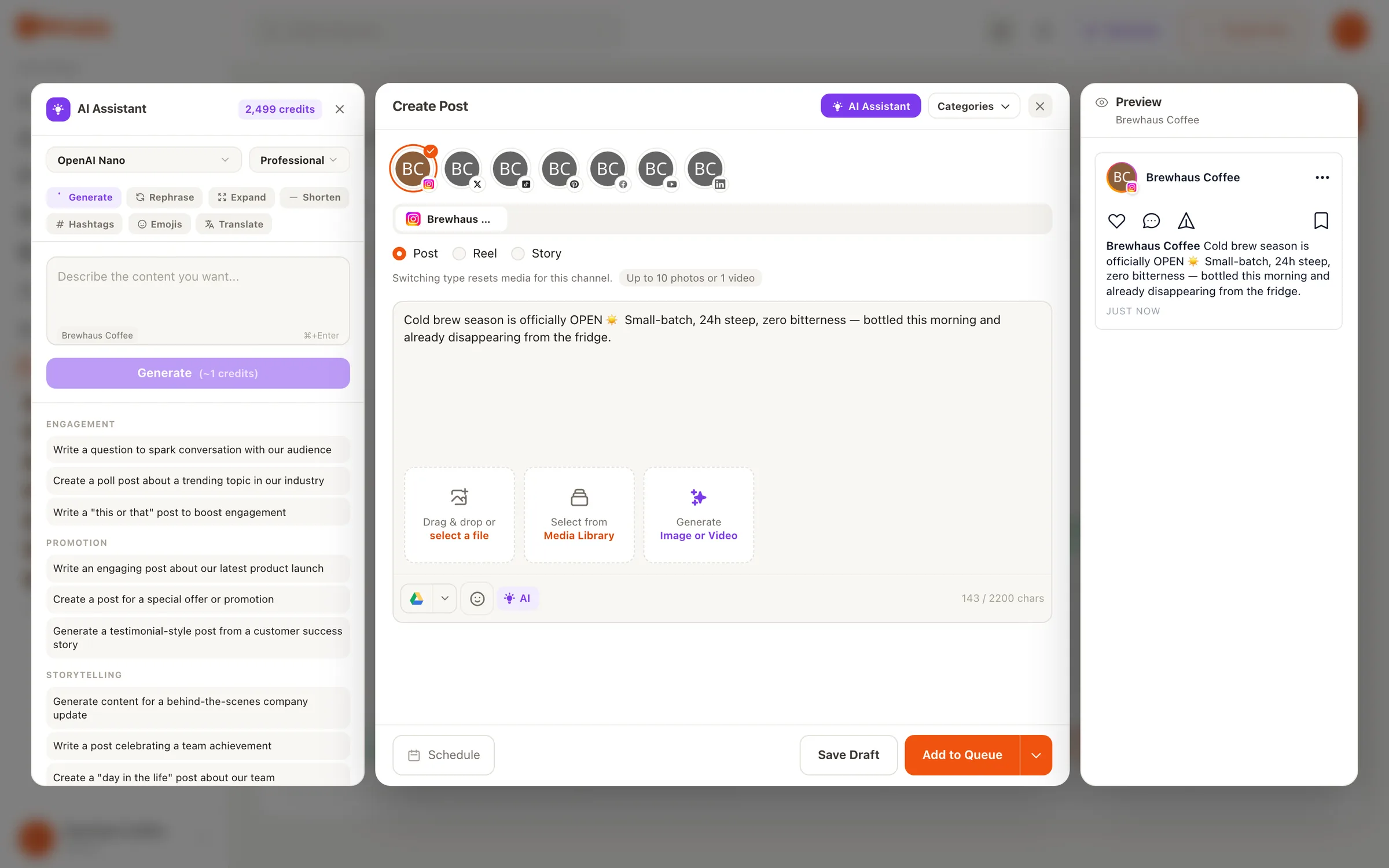
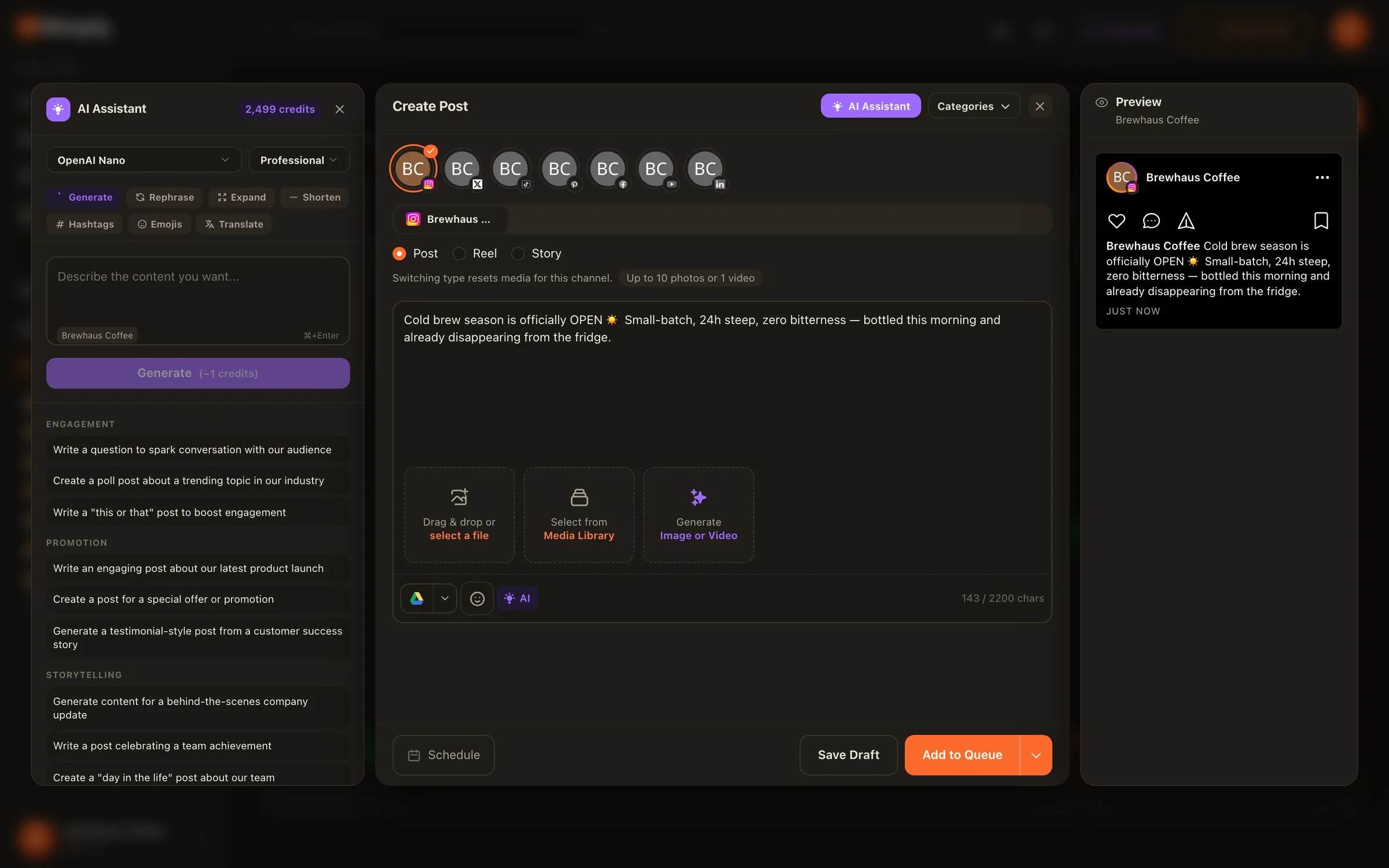
What this is, and isn’t
The drafting was never the job
Ask any working ghostwriter where their week actually goes. Not into the writing — into everything around it: re-reading a client’s old posts to reload their voice before drafting, chasing approvals over email and WhatsApp, rebuilding a scheduling spreadsheet because a client’s funding announcement moved, keeping five clients’ cadences from colliding in your head.
Clients don’t pay you for typing. They pay you for knowing what they’d say — and having the taste to say it better.
That judgment layer doesn’t systematize, and nothing here pretends to. What systematizes is the production layer: voice capture, first drafts on cadence, approval routing, and the calendar. Hand that to the machine, and the hours you get back go where the margin is — more clients, or deeper work for the ones you have. The same leverage story applies if you run full-service accounts: freelance social media managers get their own page.
The signal chain
Voice in, approved posts out
Like a studio signal chain, the order is the point: nothing reaches the schedule that didn’t pass through the client’s approval first.
Input · 01
Client samples in
Past posts, emails, call transcripts — the raw signal of how this client actually sounds.
Process · 02
Voice profile
The LinkedIn Ghostwriter is voice-matched from those samples, per client, in that client's own workspace.
Generate · 03
Drafts on cadence
Weekly, Mon-Wed-Fri, or weekdays — drafts land in the client's Planner on the rhythm you set.
Gate · 04
Client approval
Every word gets the client's sign-off before scheduling. The gate has no bypass — agents can't publish.
Corrections feed back up the chain: every edit you or the client makes is remembered, so the voice profile tightens with each cycle. Each agent run shows its credit cost, per client — clean numbers for clean invoicing.
Running the roster
Five clients, five voices, zero bleed
The failure mode of a growing ghostwriting practice is cross-contamination — the week every client starts sounding like your median client. Workspaces are the firewall: each client’s accounts, samples, agents, drafts, and approvals live in their own sealed room, and you move between rooms instead of holding five voices in one head.
Scheduling bends around client reality, too. When the funding announcement lands or the launch slips, you re-queue around it in the Planner — see scheduling LinkedIn posts — and the client approval flow keeps the sign-off trail intact through the reshuffle.
A workspace per client
Separate accounts, voice samples, agent configs, and approval flows. Nothing leaks between rooms.
Approval as a deliverable
Pending-approval drafts give your client a real veto and give you a paper trail — the professional standard, enforced by software.
Repurposing across formats
When a client's long post deserves a second life on another platform, the Content Repurposer reshapes it natively instead of cross-posting.
Pause per client, per thread
A client goes quiet for a sensitive week? Pause their agents — or a single thread — without touching the rest of the roster.
Deeper into the stack
The pieces of the production system
✍️ LinkedIn Ghostwriter
The agent at the center of the chain — voice-matching, cadence, and drafts that wait in the Planner.
🔁 Content Repurposer
One strong client post, reshaped natively for every platform the client is on.
✅ Client approval
The sign-off mechanics: pending states, reviewer flows, and the audit trail your contract implies.
Ghostwriters — FAQ
Is AI ghostwriting ethical?
The ethics of ghostwriting have never been about who holds the pen — they're about consent and sign-off. A ghostwritten op-ed is legitimate because the named author approves every word; that's been true for a century of speechwriters and executive comms. Nimply keeps that exact standard: you're transparent with your client about your process, the drafts are built from the client's own voice samples and raw material, and the client approves every word before it ships. What would be unethical — publishing in someone's name without their sign-off — is structurally impossible here, because agents can't publish directly at all.
How do I keep five clients' voices from bleeding into each other?
Separate workspaces. Each client lives in their own workspace with their own connected accounts, their own voice samples, their own agent configuration, and their own approval flow. The Ghostwriter you tune for a blunt fintech CEO never touches the workspace of your warm leadership-coach client.
What does the voice profile actually learn from?
Real samples you feed it: the client's past posts, emails, call transcripts, memos — whatever sounds like them at their best. Drafts are voice-matched to those samples, and the agent keeps learning from corrections: every edit you or the client makes to a draft is remembered for the next one.
Can my clients approve posts without logging into my whole system?
Yes — that's what the client approval flow is for. Drafts sit in a pending-approval state and your client reviews and signs off before anything is scheduled. You keep the production system; they keep the veto. See the client approval use-case for the mechanics.
Doesn't this make my job obsolete?
The drafting was never the job. The job is knowing the client — what they'd say, what they'd never say, which story from Tuesday's call is actually a post — and having the taste to shape it. Nimply industrializes the production layer (voice capture, cadence, scheduling, approvals) so one ghostwriter can run more clients at the same quality. The judgment layer doesn't systematize, and it's the part clients pay for.
Run your ghostwriting practice like a studio
Free to start: set up your first client workspace, feed the Ghostwriter their samples, and put every word through their approval.