

⛪ Nimply for Churches
Church social media, when the whole team is two volunteers and a busy pastor
You already create your best content every Sunday morning. The problem is the other six days. Nimply turns one sermon into a week of posts — quote cards, reflection prompts, and captions for the clips your team cuts — drafted by AI, shaped by a volunteer, approved by the pastor — while keeping your comment section as welcoming as your lobby.
The fanout
Sunday to Saturday: one message, seven touchpoints
A sermon is thirty-plus minutes of original teaching. Fanned out well, it carries your accounts to the following weekend — no new material required.
Sun
The sermon
Service happens. Livestream or recording captured.
Mon
Key clip
The strongest 60 seconds, captioned for Reels & Shorts.
Tue
Quote card
One line from the message, set in your church's look.
Wed
Reflection
A midweek question drawn from Sunday's text.
Thu
Second clip
A different moment for the people who missed Monday's.
Fri
Event reminder
This weekend's services, groups, and sign-ups.
Sat
Invitation
A warm 'join us tomorrow' with times and directions.
The Content Repurposer does the heavy lifting: hand it the sermon transcript and it rebuilds the material natively per platform — captions for the clips your team cuts for Reels, a reflection post for Facebook, a quote for Instagram — with lineage tracking back to the source. A volunteer then schedules the approved week in one sitting with bulk scheduling, and the calendar quietly does the rest.
Guarding the door
Your comment section should feel like your lobby
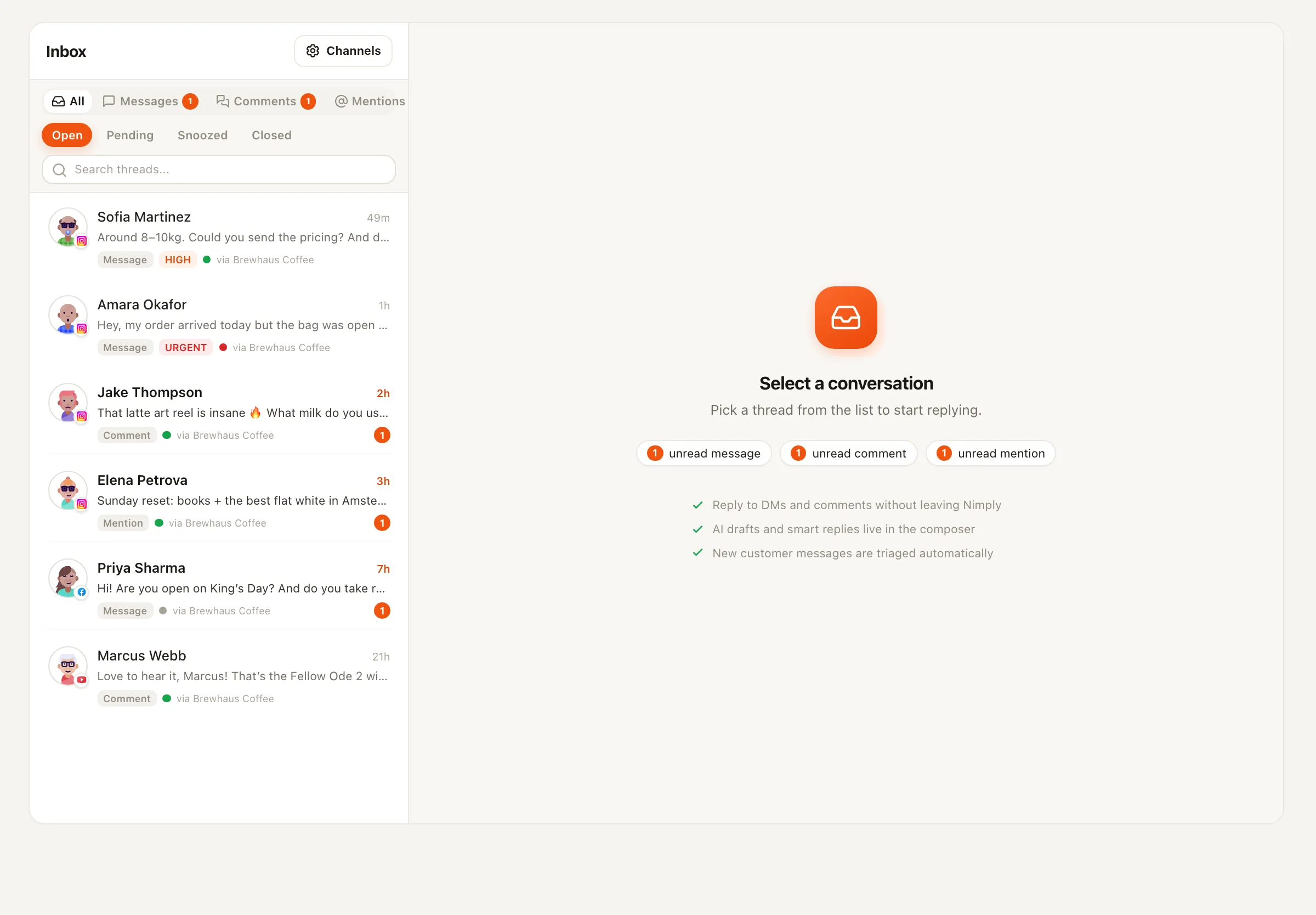
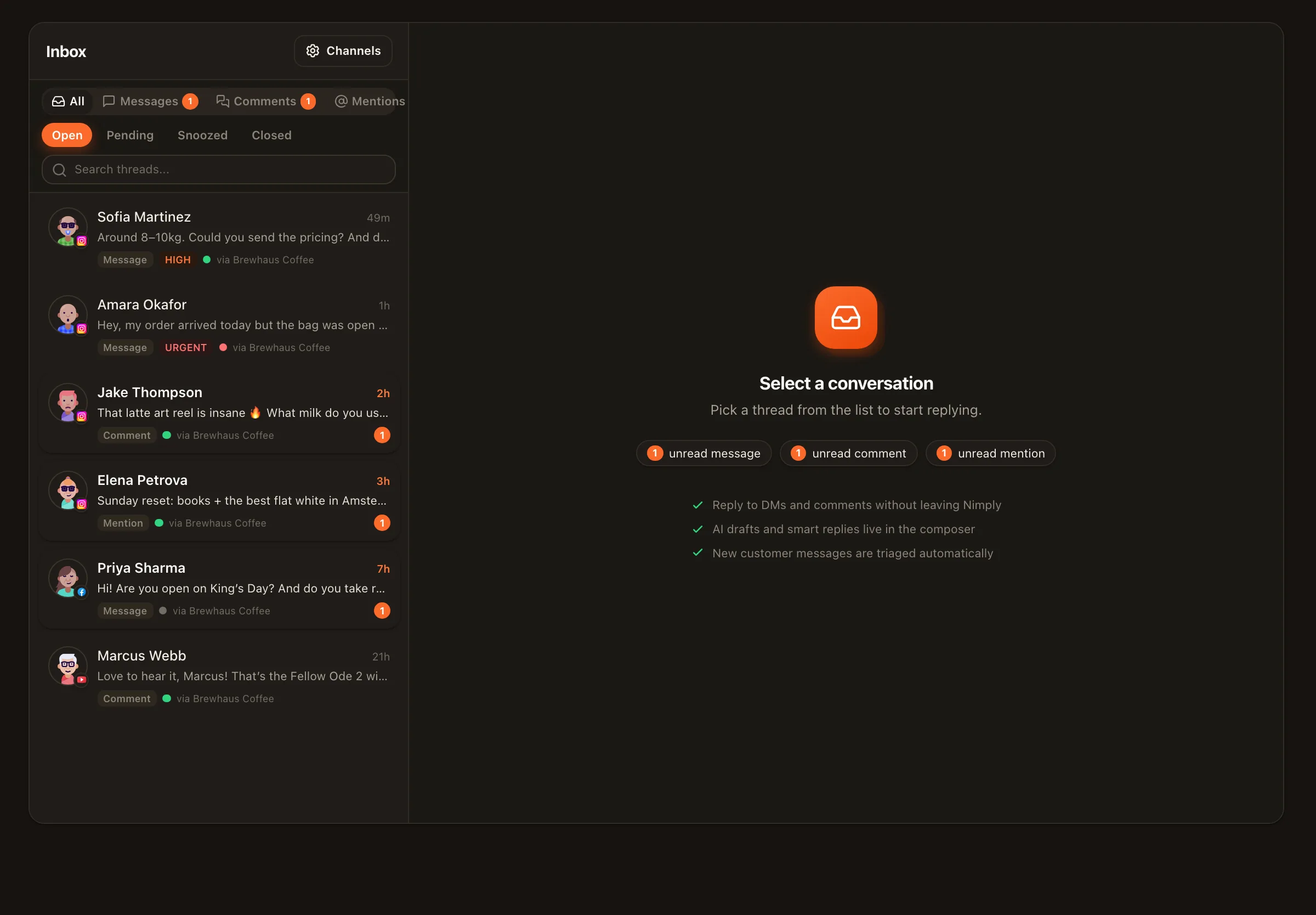
Church pages attract a particular kind of ugliness: crypto-scam waves under every livestream, fake giveaway accounts, drive-by hate. The Community Moderator hides spam and abuse before your congregation ever sees it — and leaves an audit note for every single action, so your team can review exactly what was hidden and why.
What it never does: argue with trolls, or remove honest disagreement. Hard questions and criticism always stay up. You choose the dial — log only, hide, or hide and delete — and you can see how comment moderation works before turning it on. Meanwhile the Customer Support Agent handles the good-faith messages — service times, parking, what-to-expect questions — from a profile your team fills in, draft-first if you prefer, escalating anything it shouldn’t answer.
Who signs off
Volunteers draft. The pastor approves. Then it posts.
A church account speaks for the whole congregation, so Nimply never lets an AI — or an enthusiastic volunteer — publish directly. Everything follows the same rail: draft, approval, schedule. The pastor reviews the week in one queue on Sunday night or Monday morning, and what they approve goes out on time without another thought.
Drafts wait, always
AI agents never publish on their own. Clips, quote cards, and replies sit as drafts until a person with approval rights signs off.
Roles instead of shared passwords
Volunteers get editor access in Nimply; approvers get the approval queue. Nobody needs the actual Facebook login, and offboarding a volunteer is one click.
A visible trail
Who drafted, who approved, what the moderator hid and why — it's all recorded, so trust in the account is something you can show, not assume.
An illustration
Easter week at a mid-size congregation
Imagine a fictional congregation of a few hundred, with one comms volunteer and the busiest week of the church year ahead. Palm Sunday’s message gets fanned out Monday: two clips the volunteer cut, a quote card, a Good Friday service reminder, and an Easter invitation, with every caption and post drafted from the transcript and scheduled in a single evening. The pastor approves the batch from their phone between hospital visits. Through the week the moderator quietly hides the scam comments that always swarm holiday livestreams, and the support agent answers “what time are Easter services?” dozens of times with the exact schedule the volunteer typed into the profile once.
Nobody worked less hard that week — Easter is Easter. But the social accounts stopped being a second job stacked on top of it.
Churches — common questions
Our accounts are run by volunteers — how do handoffs work?
Nimply is built for exactly that shape of team. A comms volunteer drafts the week, submits it for approval, and the pastor or communications lead reviews everything in one queue before it's scheduled. Volunteers can change without the workflow changing, and nobody needs admin passwords to the actual social accounts — access lives in Nimply with roles.
We keep getting crypto and giveaway scam comments. Can Nimply stop them?
Yes — churches get hit with these waves constantly, and the Community Moderator exists for it. It hides spam, scams, and hate before your congregation sees them, on a dial you choose: log only, hide, or hide and delete. Every action gets an audit note explaining why, and honest criticism or hard questions are always left up — it only removes abuse, never disagreement.
Can the AI answer questions like service times or parking?
The Customer Support Agent answers DMs and comments from a business profile you fill in — service times, location, parking, kids' ministry check-in, whatever you include. It can run draft-first so a person approves each reply, and anything it isn't sure about gets escalated to your team instead of guessed at.
Does anything post without approval?
No. Every AI agent on Nimply drafts first; a human approves; only then is it scheduled. For a church that matters doubly — the account speaks for the congregation, so the pastor or comms lead sees every clip, caption, and quote card before anyone else does.
Which platforms does this work on?
Scheduling and publishing cover Facebook, Instagram, YouTube, TikTok, X, LinkedIn, Pinterest, Threads, and Telegram. The DM and comment agents currently work on Facebook Pages and Instagram professional accounts, with comment coverage on Facebook, Instagram, and YouTube today — and inbox access is opt-in per channel, so agents only touch the accounts you enable.
Will the posts sound corporate instead of like our church?
The best material is already yours — the fanout works from the sermon's own words, so clips and quote cards carry your pastor's actual voice, not marketing copy. Drafts are starting points a volunteer edits in minutes, and because everything passes through approval, anything that doesn't sound like your house never goes out.
This Sunday's sermon is next week's content
Set up the fanout free, hand volunteers a real workflow, and keep the pastor's sign-off on everything.