Nimply Logo

⏰ Timing, honestly

The best time to post on Instagram isn’t in a chart

Search “best time to post on Instagram” and you’ll find a hundred confident tables — Tuesday 9am, Wednesday 11am, Friday 2pm. They can’t all be right, and in a meaningful sense none of them are: they’re averages across millions of accounts that have nothing to do with yours. Here’s what actually determines your timing — and how to stop deciding it by hand.

Part one

Why universal “best hour” tables are mostly noise

A global average is a strange thing to obey. When a study says engagement peaks Tuesday at 9am, it has averaged together fitness coaches in Sydney, restaurants in Berlin, and meme accounts in Ohio — audiences that are literally asleep during each other’s peaks. The output is a number that describes everyone and applies to no one.

There’s a second problem: the tables describe when other people post successfully, which partly reflects when other people post at all. Following the chart puts your post into the most crowded moment of the day on the theory that crowded means good.

None of this means timing is fake. It means the answer is local to your account — and it comes from three things you can actually reason about.


Part two

The three things that actually determine your best time

1 · Geography

Where your audience wakes up

Timing is downstream of time zones. An account with a US-coast-to-coast audience has a different day shape than one that’s mostly European — and if your followers span both, your “best hour” may genuinely be two hours, one per region.

2 · Niche rhythm

When your niche actually scrolls

Broad human patterns do exist — commutes, lunch breaks, the evening couch scroll — and they’re fair starting points as long as you treat them as hypotheses. B2B audiences skew into the workday; hobby and entertainment niches skew evenings and weekends. Your niche picks which pattern is yours.

3 · Consistency

Showing up at all, repeatedly

The uncomfortable truth: a steady cadence in decent slots beats sporadic posts at “perfect” ones. Consistent posting is also the only way to learn your timing — you can’t compare Tuesday against Thursday if you only posted twice this month.

Part three

Turn your answer into slots — then stop thinking about it

Once you have a working theory of your timing, the worst thing you can do is re-decide it every single post. Nimply’s best-time queues operationalize the theory: define your preset slots per channel — say weekday 8am and 6pm for your audience — and from then on, adding a post to the queue automatically fills the next open slot.

  1. 1 · Define your slots

    Set the recurring times per channel, based on your audience's geography and niche rhythm — your theory, encoded once.

  2. 2 · Queue, don't schedule

    Add posts to the queue and Nimply fills the preset slots in order. Drag anything to a different slot when a post is time-sensitive.

  3. 3 · Review and refine

    After a few consistent weeks, check your results and move the slots — a queue makes the comparison fair because cadence stayed steady.

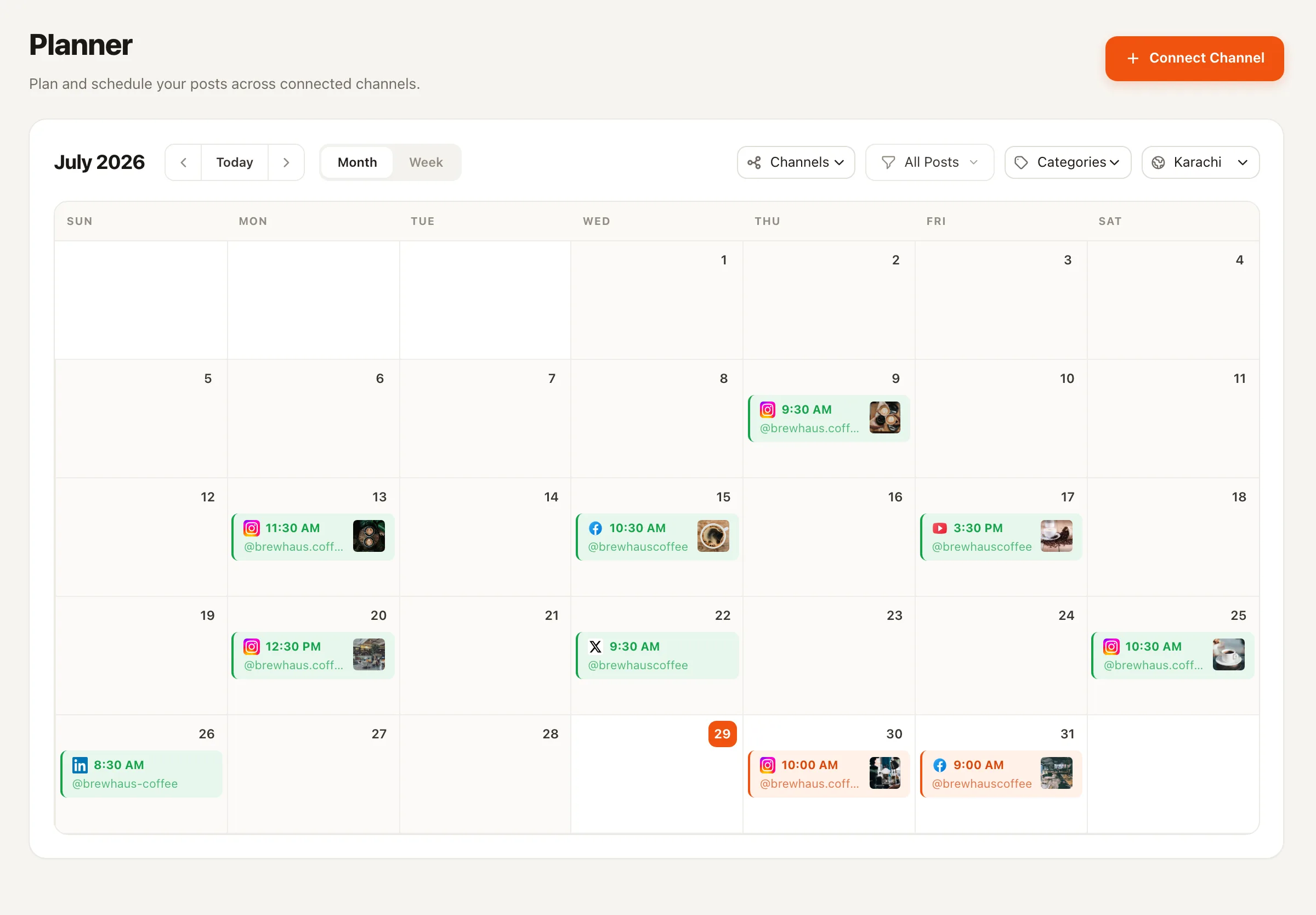
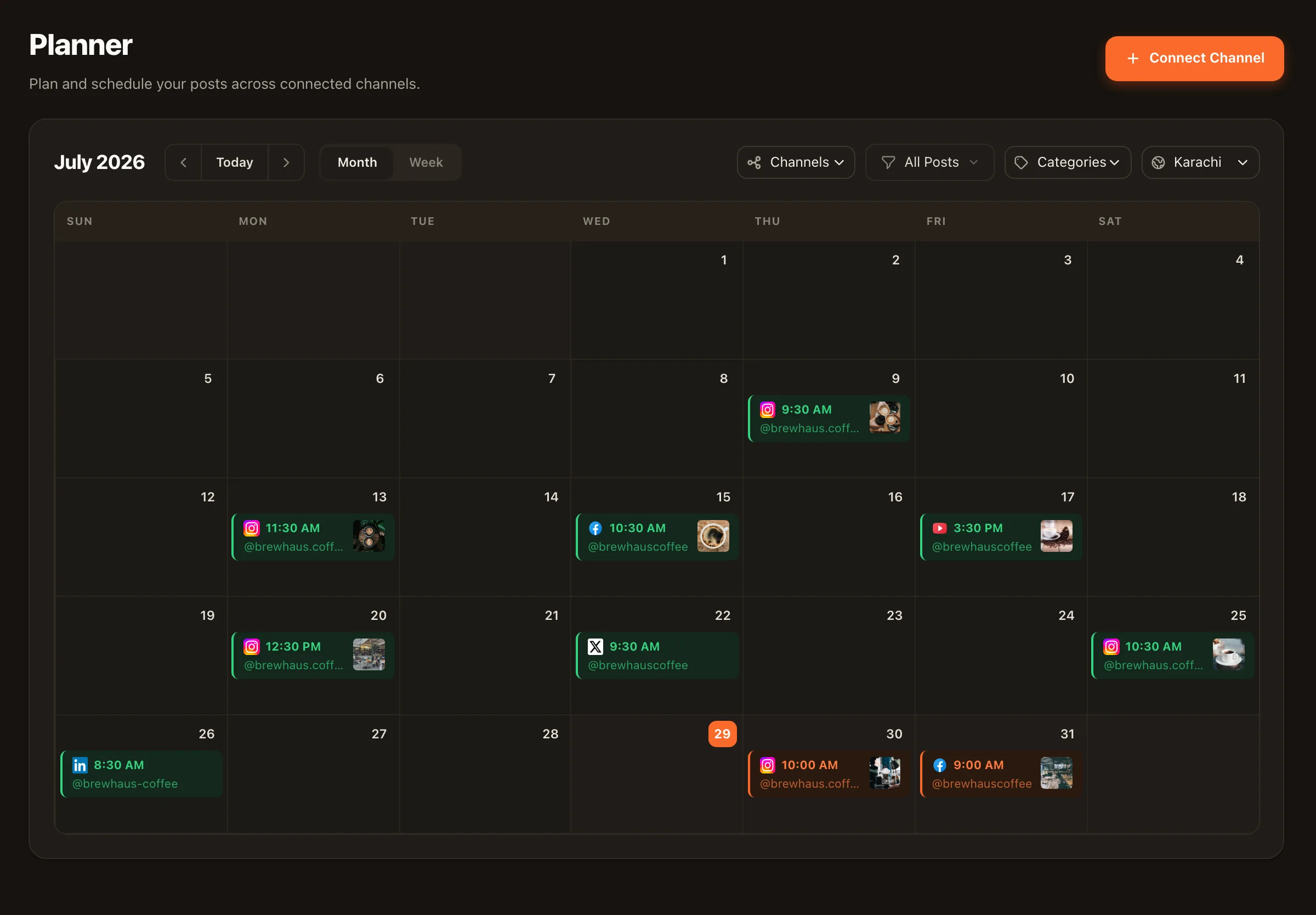
The Nimply planner calendar with posts placed into recurring best-time queue slots across the week
Slots hold the strategy; the queue fills them. The calendar shows the result.

A note on measurement

Where the numbers come from (honestly)

Nimply’s built-in analytics are YouTube-first today — if YouTube is one of your channels, post metrics live right next to your queue. For Instagram and the rest, use each platform’s native insights to judge your slots while our analytics coverage grows. We’d rather tell you that plainly than sell you a dashboard we haven’t shipped.

The queues themselves are part of Nimply’s social media scheduling foundation, and they work the same on every channel — see how they fit an Instagram posting workflow or a YouTube Shorts drip, or dive into everything Nimply does for Instagram. And once your slots are set, the Evergreen Recycler agent can keep them fed with proven posts — as drafts for your approval, never published on its own.

Best time to post — FAQ

So is there a single best time to post on Instagram?

Not one that applies to everyone. Published "best hour" tables are averages across millions of wildly different accounts — a bakery in Lisbon and a gaming channel in Seattle have nothing in common except being in the same spreadsheet. Your best times come from your audience's geography and daily rhythm, and you find them by posting consistently and watching what happens.

Are generic timing studies completely useless, then?

Not completely — they're a starting point, nothing more. Broad patterns like commute windows, lunch breaks, and evenings existing at all is real; which of them matters for your account is what the studies can't tell you. Start with a sensible guess, then let your own results promote or demote each slot.

What is a best-time queue in Nimply?

You define a set of preset posting slots per channel — say weekday mornings and two evenings. From then on you don't pick times at all: add a post to the queue and it automatically fills the next open slot. The strategy lives in the slots; the queue does the remembering.

How do I actually find my best slots?

Pick starting slots from what you know about your audience — where they live, when your niche is active. Post consistently into those slots for a few weeks, check your platform's native insights (Instagram's included), and adjust the slot definitions. Because a queue keeps cadence steady, you're comparing timing on fair terms instead of guessing off one viral outlier.

Does Nimply show me engagement analytics for Instagram?

Honest answer: Nimply's analytics are YouTube-first today — channel and post metrics for YouTube live in the product now, with more platforms to follow. For Instagram timing decisions, pair Nimply's queues with Instagram's own insights for the measurement side.

Does timing matter more than content?

No, and anyone selling you a magic hour is skipping that part. A great post at a mediocre time beats a mediocre post at the perfect time. Timing is a multiplier on consistency and quality — which is exactly why it should be automated into slots, so your attention goes to the content.

Stop re-deciding the same question every post

Encode your best times as queue slots once, keep the cadence automatic, and spend the saved attention on the content itself.