

🚀 Nimply for Founders
Social media for founders: build in public, on rails
Founder-led content works because it’s the founder’s voice — and it fails because founders should be building, not drafting LinkedIn posts at midnight. Nimply’s answer is a ghostwriter on rails: voice-matched drafts from your raw notes, and a hard rule that nothing posts without your signature.
Voice-matched from your samples · drafts wait in Planner · nothing ships without your sign-off
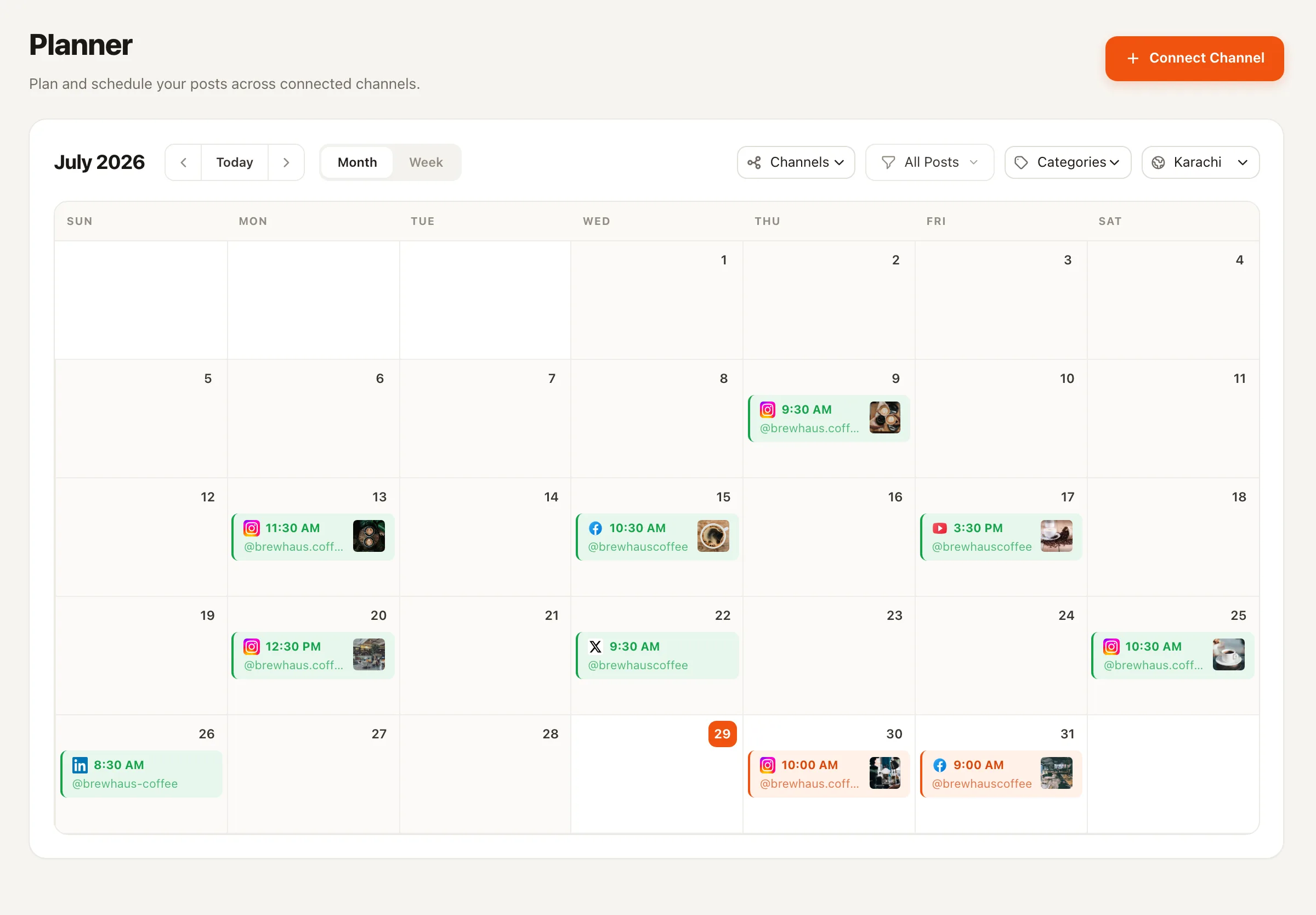
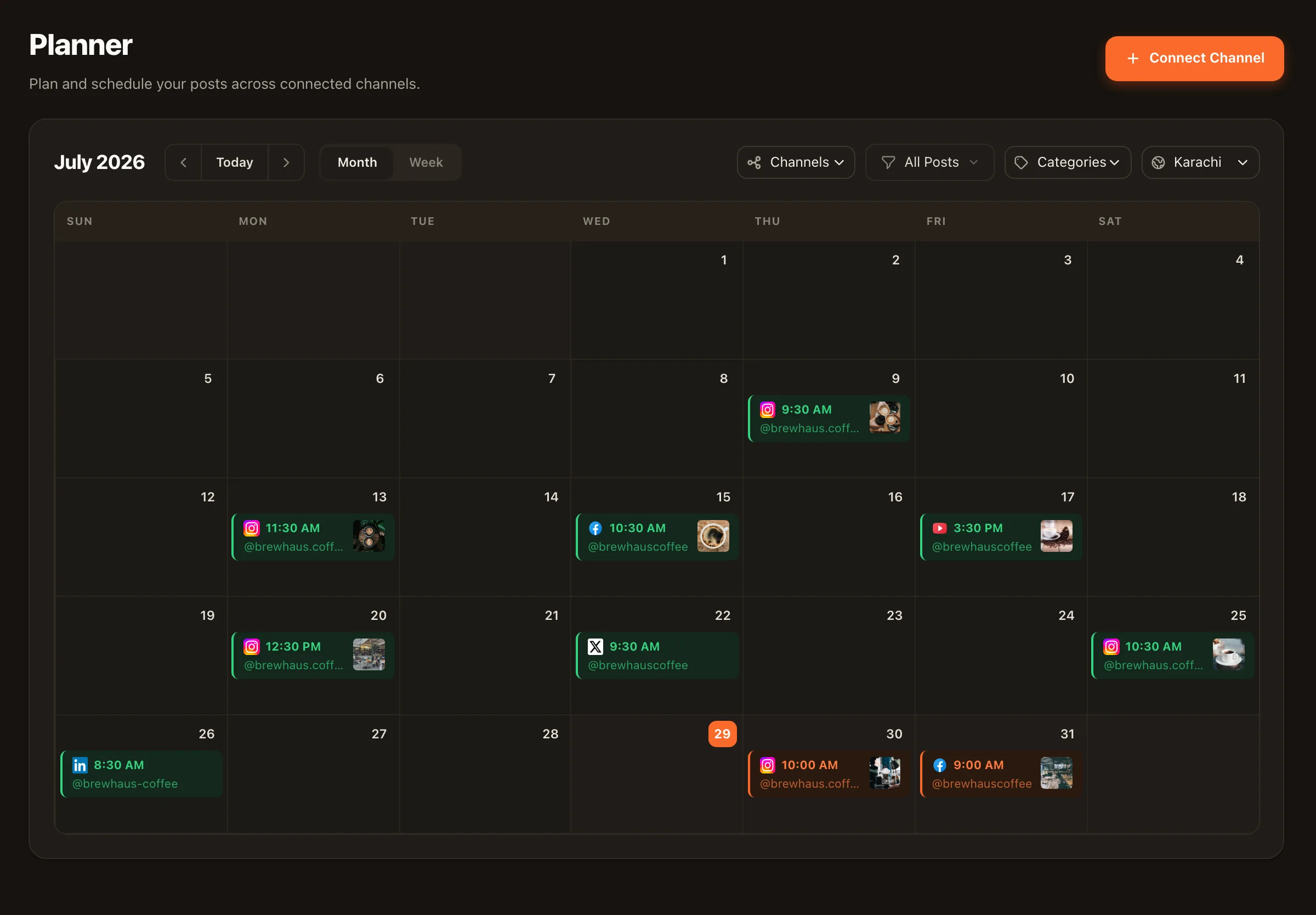
The founder-content paradox
The content only you can make is the content you have no time to make
Nobody follows a company account for the company account. They follow the founder — the person who was in the room when the hard call got made, who can say “here’s what we got wrong” with the authority of having gotten it wrong. That credibility can’t be delegated to a marketing hire, and audiences can smell it when it is.
But the same person holding that credibility is also shipping, hiring, and fundraising. So founder content dies the usual death: a strong month, then a quiet quarter. The paradox isn’t a discipline problem. It’s that the raw material — your week — is abundant, while the hours to shape it are gone.
You don’t lack stories. You lack a writer who sounds like you and works while you build.
Build in public, on rails
Your week, and the week your audience sees
One artifact connects the two columns: the notes you dump on Friday. Everything on the right was drafted from them — in your voice, on your cadence — and every draft waits for your yes.
Your actual week
- MonShip the release that slipped last week
- TueThree candidate interviews, one offer call
- WedCustomer calls — two churn saves, one expansion
- ThuInvestor update and the deck that follows it
- FriTen minutes: dump the week into raw notes
The artifact · your Friday notes
“launch slipped 4 days b/c migration — worth it. offer out to L. two churn saves came from same onboarding gap?? investor update: focus q re: pricing”
Illustrative. Messy is fine — messy is the input format.
What the Ghostwriter drafted from them
- MonDraft from your launch note — waiting in Planner
- WedDraft on the hiring lesson you jotted — waiting
- FriDraft from the churn-save story — waiting
The LinkedIn Ghostwriter is voice-matched from writing samples you provide and runs on the cadence you pick — weekly, Mon-Wed-Fri, or weekdays. Drafts land in the Planner and wait. Approving them takes minutes; see scheduling LinkedIn posts for how the queue side works.
The rails
Approval isn’t friction. It’s the authenticity guarantee.
The fair objection to AI founder content is that it stops being yours. Nimply’s answer is structural, not aspirational: agents never publish directly. The pipeline is draft → your approval → schedule, with no bypass. Ghostwritten-but-signed has been the standard for executive communication for a century — the product just enforces the signing part. A formal approval workflow extends the same guarantee to a co-founder or comms lead.
Nothing posts that you didn't sign
Drafts wait in the Planner until you approve them. There is no auto-publish mode for agents — by design, not by settings.
Corrections become memory
Edit a draft and the agent remembers. Your ghostwriter gets closer to your voice with every review pass, like a good hire would.
Costs are visible per run
Every agent run shows its credit estimate up front and actual spend after. You always know what the staff costs.
Trend Scout keeps you in the conversation
Sourced idea cards from your market's live coverage — so your takes land while the conversation is happening, with a real article behind every angle.
Adjacent reading
If this is you, these are next
🔭 Trend Scout
The agent that watches your market and files sourced angles — founder takes need conversations to join.
🧍 Solopreneurs
No team at all yet? The org-chart-of-one version of this story, from inbox triage to recycling.
📅 Schedule LinkedIn posts
The mechanics under the Ghostwriter: queues, best times, and the calendar your drafts wait on.
Founders — FAQ
How does the Ghostwriter learn to sound like me?
You give it real samples of your writing — posts, emails, memos, anything that sounds like you at your best. It builds drafts voice-matched to those samples, and it keeps learning: every edit you make to a draft is a correction it remembers for next time. The more you approve and adjust, the closer it gets.
Is ghostwritten founder content still authentic?
The authenticity lives in two places: the raw material and the sign-off. The drafts are built from your actual notes and your actual voice samples — not generic thought-leadership filler — and nothing can post without your approval. If you didn't sign it, it doesn't ship. That's the same standard a human ghostwriter's client holds, enforced by the product itself.
How much of my week does this actually take?
The honest answer: the time it takes to jot notes you were half-writing anyway, plus a review pass on drafts waiting in your Planner. You choose the cadence — weekly, Monday-Wednesday-Friday, or weekdays — and the drafting happens between your notes and your review, not during your build time.
What if the Ghostwriter drafts something I'd never say?
Then it dies in the Planner — drafts have no path to publication except through you. Edit it and the agent learns from the correction, or reject it outright. You can also pause the agent entirely at any point, and every run shows its credit cost before and after, so there's no silent spend either.
Can it help me join conversations, not just broadcast?
That's the Trend Scout's job. It watches live industry sources plus any trend feeds you connect, filters them through your niche, and files sourced idea cards — each one traceable to a real article. When a market conversation is worth a founder's take, you'll have the angle and the source in hand.
Keep building. Keep posting. Sign everything.
Hire the LinkedIn Ghostwriter free, feed it your writing samples and your Friday notes, and review drafts on your cadence — not at midnight.