

Nimply Logo

⏱️ Engagement & inbox

The social media SLA: response times you actually keep

A social media SLA is a promise with a clock on it: how fast someone who DMs, comments, or mentions you gets a response. Most teams have an implied one — “we’re pretty quick” — and no idea when they break it. This guide covers what an SLA looks like for a social inbox, how to pick targets, and how breaches stay visible in Nimply.

SLA policies · this workspace

Customer DMs

On track

First reply within 2h

Business hours3 open · oldest 0h 41m

Complaint-tagged threads

SLA breached

First reply within 1h

Business hours1 breached · 1h 24m waiting

Comments & mentions

On track

Response within 24h

7 days a week12 open · oldest 6h

Illustrative policies — targets are yours to define, breaches are flagged in the queue.

The anatomy

Three decisions make an SLA real

Borrowed from support teams, translated for social. Without all three, “we answer fast” is a mood, not a policy.

01

Scope — which threads count

A DM from a paying customer is not a fire emoji on a Reel. Scope targets by conversation type and tag: DMs, complaint-tagged threads, lead-tagged threads, plain comments. AI triage applies those tags on arrival, so scoping is automatic.
02

Target — how fast, and when the clock runs

A first-response time plus a working window: within 2 hours during business hours reads very differently from within 2 hours, ever. Decide whether weekends count before your audience decides for you.

03

Breach visibility — what happens on a miss

The part most teams skip. A target nobody can see slipping is a wish. Breaches need to surface in the queue itself, where the person working the inbox will hit them mid-shift — not in a report opened monthly.

Picking numbers

Starting points, not benchmarks

There is no universal “right” response time, and we won’t invent one. What follows are example targets a small team might set on day one — deliberately keepable, so the breach flag stays meaningful. Run them for a few weeks, look at your actual breach record, then tighten where it matters and loosen where it doesn’t.

The one rule of thumb worth keeping: complaints and leads deserve the tightest clocks. A late reply to praise costs a little warmth; a late reply to a complaint or a buying question costs the relationship.

Thread typeExample starting targetWhy
Complaint-tagged threads1–2 business hoursAnger compounds in public; a fast acknowledgement defuses most of it.
Customer DMs2–4 business hoursPrivate, high-intent, and usually blocking something for the sender.
Lead-tagged threadsSame business dayBuying intent cools fast; “we'll get back to you” rarely converts.
Comments on your posts24 hoursTimely enough to feed the conversation while the post is alive.
Mentions elsewhere24–48 hoursWorth showing up for, but rarely urgent enough to page anyone.

Examples of targets you might set — not industry research, and not what “everyone else” achieves.

In practice

A target the whole queue can see

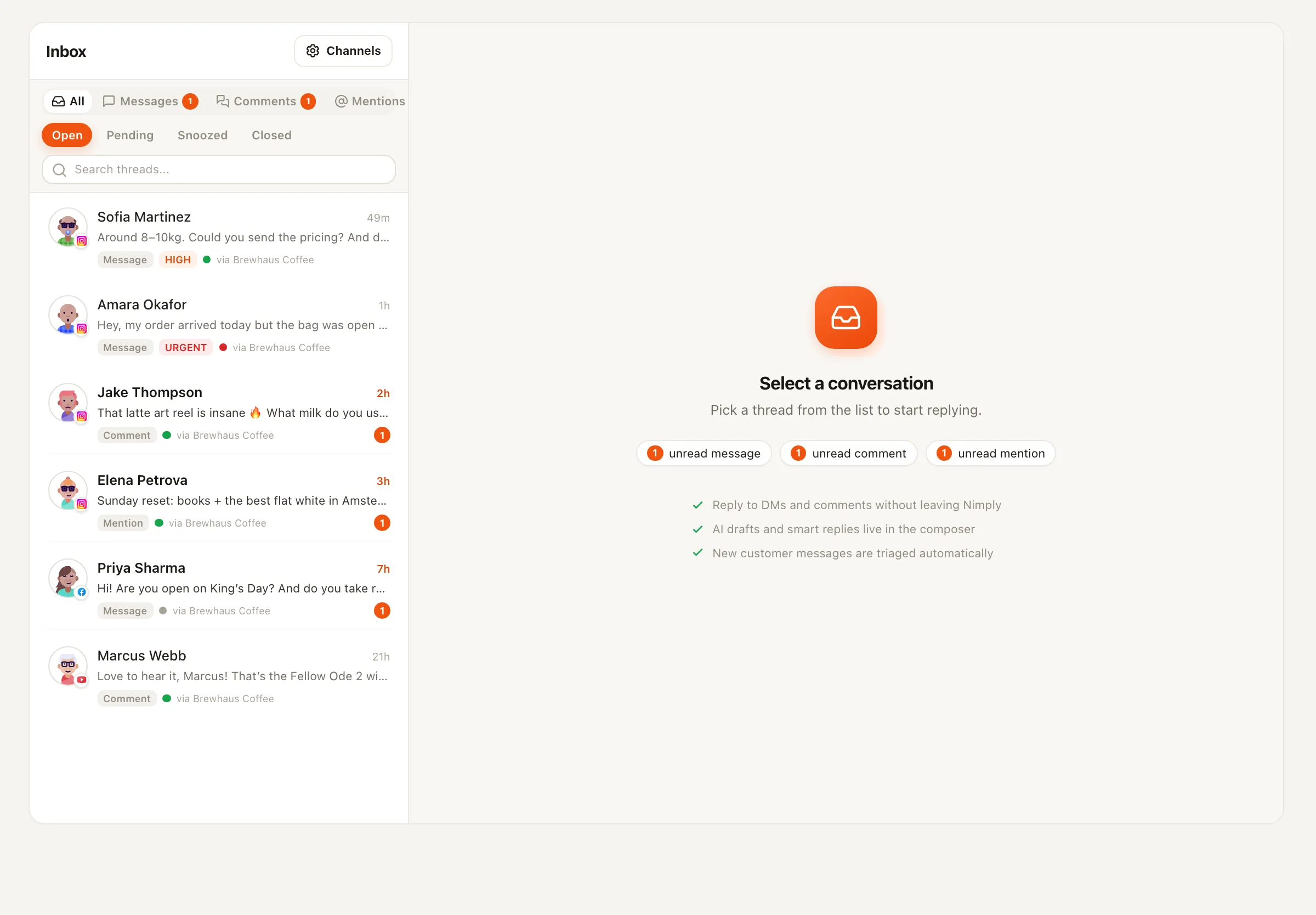
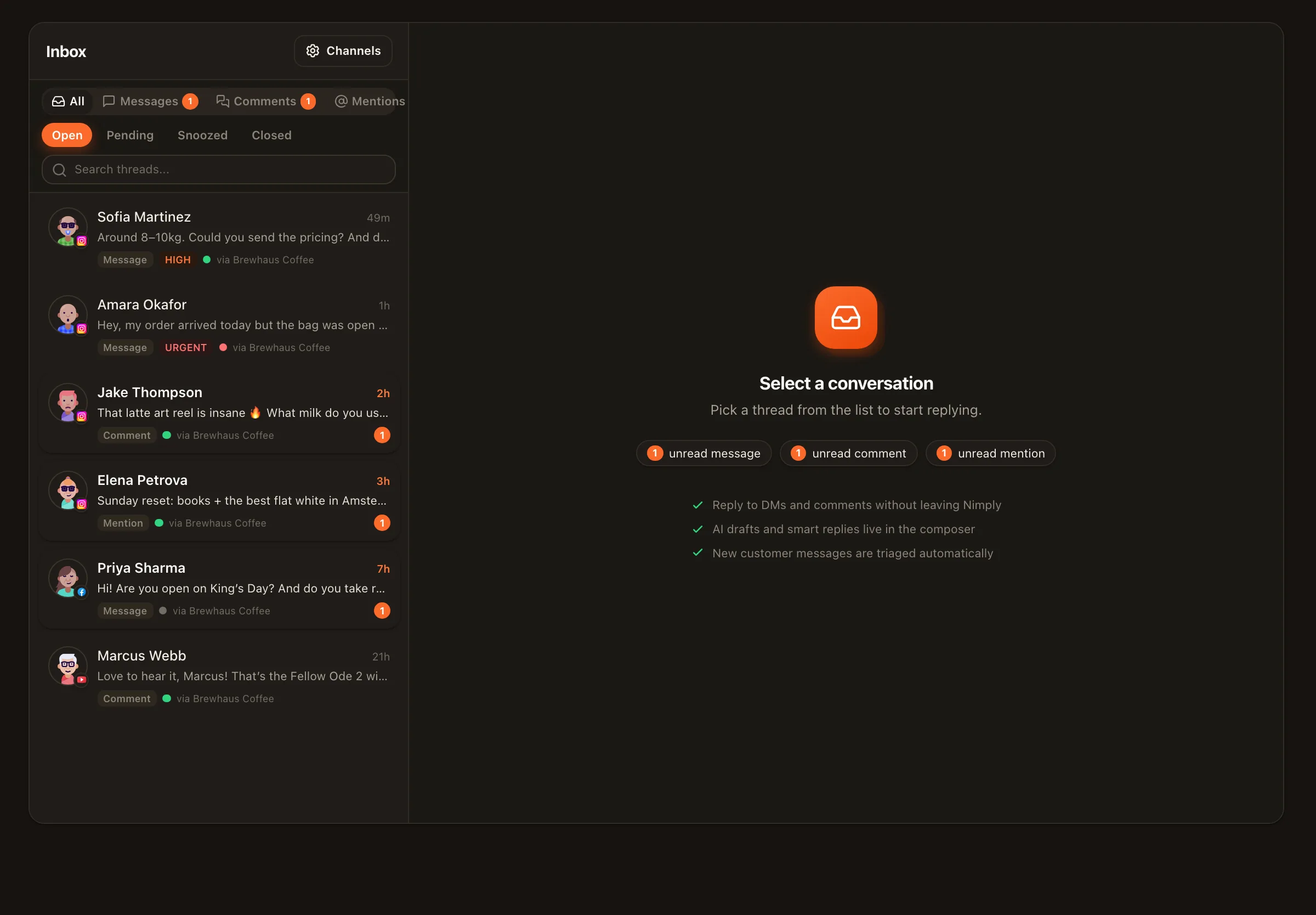
In Nimply, SLA policies live on the unified inbox — the same queue that holds your DMs, comments, and mentions from Facebook Pages, Instagram professional accounts, and YouTube (more platforms as approvals land, and each channel opts in individually). Getting from “a mood” to “a policy” looks like this:

  1. 1

    Enable the inbox on the channels you're committing to — an SLA on a channel nobody watches is theater.

  2. 2

    Let AI triage tag a week of threads so you know your real mix of complaints, leads, questions, and noise.

  3. 3

    Create SLA policies with response-time targets for the thread types that matter most, and business-hours windows you can staff.

  4. 4

    Add assignment rules so every in-scope thread has an owner — targets without owners just distribute guilt evenly.

  5. 5

    Work the queue; breached and at-risk threads surface visibly, so the day's priorities are self-evident.

Two force-multipliers when the clock gets tight: saved replies for instant answers to the repeat questions, and the Customer Support Agent drafting the routine tier — draft-first by default, per-run credits in the open, and it stands down in any thread the moment a human types. The full workflow around all of this lives in the inbox management guide.

Nimply's unified inbox queue where threads with response-time targets and SLA breaches are surfaced
Breaches surface in the queue your team already works — not in a report nobody opens.

Social media SLAs — FAQ

What does SLA mean for social media, in one sentence?

A social media SLA (service level agreement) is a stated response-time target for the conversations that reach you on social — for example, first reply to any customer DM within 2 hours during business hours — plus visibility into when you miss it.

Is there an industry-standard response time I should use?

Be suspicious of anyone quoting one. Sensible targets depend on your volume, your team size, and what your audience actually expects of you. The honest approach is to pick starting targets you can keep, measure how often you breach, and tighten from there — not to copy a number from a blog post.

How do SLA breaches surface in Nimply?

SLA policies attach response-time targets to inbox threads, and threads that miss their target become visibly flagged in the queue. Instead of discovering a three-day-old complaint by accident, the breach announces itself where your team already works.

Do SLAs apply to comments and mentions, or just DMs?

Anything that lands in the unified inbox can be held to a target — Facebook Page DMs and comments, Instagram DMs, comments, and mentions, YouTube comments. In practice most teams set tighter targets on DMs and complaint-tagged threads than on general comments.

Can AI agents help us hit our SLA?

Yes — that's most of why teams pair them. AI triage tags intent and sentiment on arrival so urgent threads route to a human immediately, and the Customer Support Agent drafts replies for the routine tier so your team's time goes to the threads that threaten the target. Agents are draft-first by default and pause in any thread the moment a human types.

Should we promise our SLA publicly?

Only after you've kept it privately for a while. An internal SLA is a management tool; a public one is a marketing promise. Run the internal target first, look at your breach record honestly, and only publish a number you beat comfortably.

Put a clock on it — and keep it

Open the unified inbox, set one keepable response-time target, and let breaches surface themselves.