

Nimply Logo

⚖️ Nimply for Law Firms

Social media for lawyers, with approval built into the rail

The reason most firms post nothing isn’t a lack of things to say — it’s the fear of the wrong thing going out under the firm’s name. Nimply builds social media for lawyers around one guarantee: nothing publishes until someone you’ve authorized signs it off. Not posts, not AI drafts, nothing.

1

Draft

An associate, your marketing person, or an AI agent writes it. Drafts are just drafts — inert until reviewed.

2

Partner review

The post waits in the approval queue. A reviewing partner edits, approves, or rejects. This step cannot be skipped.

The step that never gets skipped

3

Scheduled

Only approved posts enter the calendar, timed and queued across your firm's channels.

4

Published

The post goes out exactly as signed off — what the partner approved is what the public sees.

The content

Law firm social media marketing has a safe, boring, effective core

Nobody needs the firm to be edgy. The content that builds a practice is the content a reviewing partner can approve without a second read — explanations, milestones, and proof the firm is part of its community.

For most firms that means an educational cadence on LinkedIn and Facebook — and if partners want a personal presence, the LinkedIn Ghostwriter drafts in their voice on a cadence, with every draft waiting in the same approval queue as everything else.

  • Educational explainers

    What actually happens in mediation. What a custody evaluation involves. General-information content, clearly framed as not legal advice — the posts people save and remember you for.

  • Firm news, stated plainly

    New partners, new practice areas, speaking engagements, published articles. No outcome promises, no superlatives a bar regulator would frown at — just the record of a firm in motion.

  • Community presence

    The legal-aid clinic your associates staff, the local sponsorship, the pro bono milestone. This is the content that humanizes a firm without saying a word about any case.

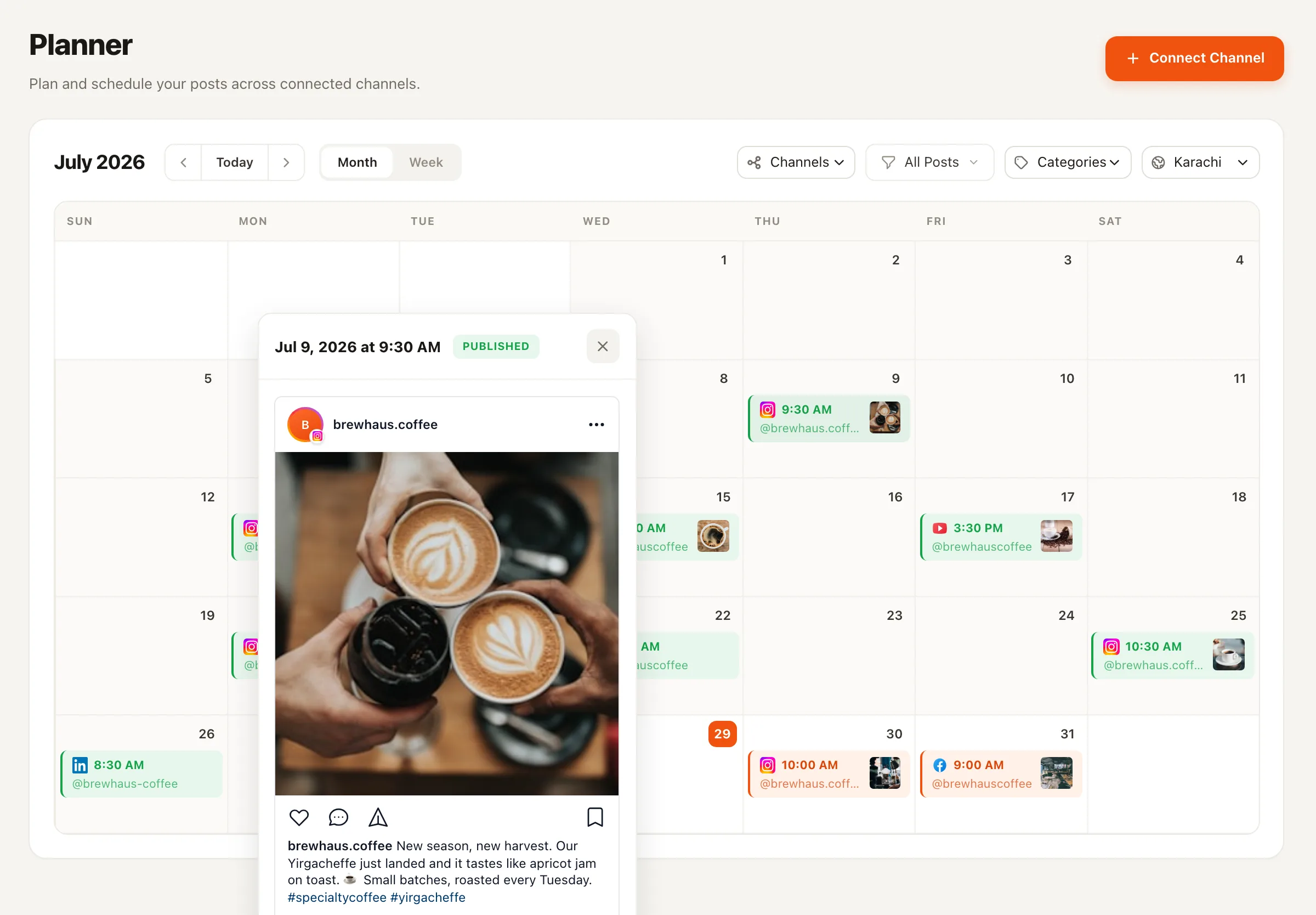
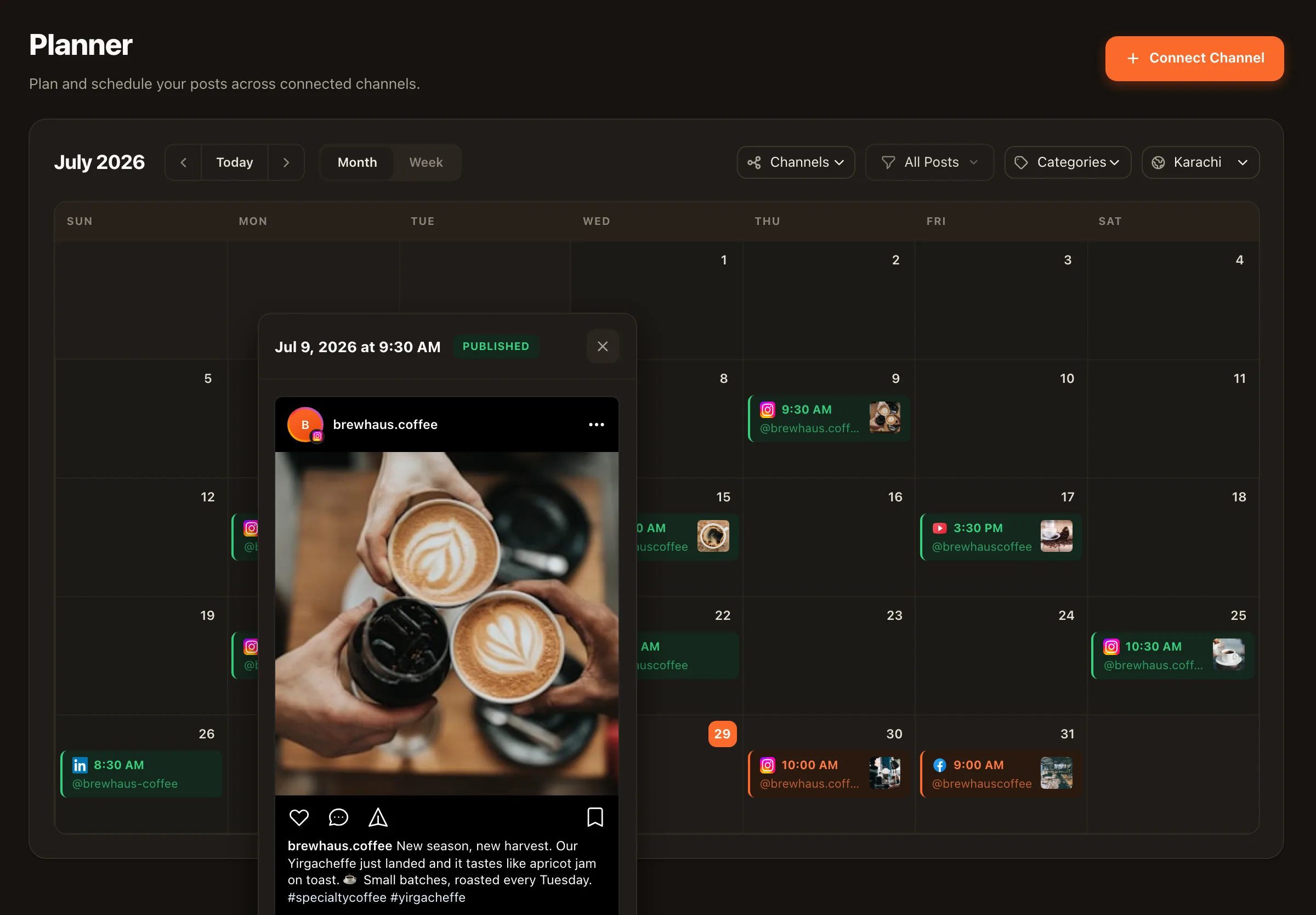
A post preview in Nimply's planner showing the draft awaiting approval before scheduling
Every post — human-written or AI-drafted — waits here until a reviewer signs it off.

The rail

AI drafts. Humans approve. In that order, always.

Nimply’s agents can draft explainer posts, ghostwrite for partners, and prepare replies to routine questions — but no agent in the platform can publish directly. Draft, approval, schedule is the only path to the feed, which is why the approval workflow is the product story here, not a footnote.

Around the rail sit the disclaimer-friendly conveniences: hashtag sets so approved tag groups get reused instead of retyped, and saved replies so “this isn’t legal advice — here’s how to book a consultation” is one click of reviewed language, every time.

The comment section

Civil comments, without silencing critics

A firm’s comment section attracts spam, solicitation, and the occasional abusive rant. The Community Moderator hides spam and hate before your audience sees it — on Facebook, Instagram, and YouTube comments — with a trust dial you control: log-only, hide, or hide and delete. Two things it will never do: argue with anyone (it has no reply tool by design), and touch criticism. Negative feedback always stands, and every action it does take leaves an audit note.

Illustrative scenario

How a four-partner family-law firm runs it

Tuesday — drafting

Picture a four-partner family-law practice. The paralegal who owns marketing drafts next week's content: two custody-process explainers, a firm-news post about a partner's CLE talk, and a photo set from the legal-aid clinic. The AI assistant helps with first drafts; she shapes them.

Friday — partner review

The reviewing partner opens the approval queue over lunch. Four posts: approve, approve, tighten one sentence in the explainer, approve. The standard disclaimer language and hashtag set are already applied from saved sets. Ten minutes, done for the week.

All week — the rails hold

Approved posts publish on schedule. The moderator quietly hides two spam comments and logs both actions. A DM asking about a specific custody case gets the saved consultation reply — reviewed language, not an associate improvising at 9pm.

The result of good law firm social media marketing isn’t virality — it’s a steady public record of competence that a partner signed off on, every single time.

Social media for lawyers — FAQ

How does this square with bar advertising rules?

Honestly: bar rules vary by jurisdiction, and Nimply doesn't give legal or compliance advice — that's your ethics counsel's call. What Nimply provides is the control those rules usually demand: nothing publishes without explicit approval, AI-drafted content is clearly held as drafts until a human signs off, and you decide who in the firm holds approval authority. The judgment stays yours; the workflow just guarantees the judgment actually happens.

What if someone asks for legal advice in our DMs or comments?

You set the rails. The Customer Support Agent answers only from the business profile and FAQ you give it — office hours, practice areas, how consultations work — and escalates anything beyond that to your team. Pair it with saved replies like a courteous "we can't discuss specifics here, but here's how to book a consultation" so the response to advice-seeking messages is consistent, reviewed language, not improvisation.

Can anything ever auto-publish?

No. Agents in Nimply never publish directly — that's an architectural rule, not a toggle. Every agent-drafted post follows draft, then approval, then schedule. Inbox agents can be kept in draft-first mode so even DM replies wait for a human, and any conversation can be paused per-thread. For a law firm we'd suggest draft-first everywhere, at least until your reviewing partner has seen a few weeks of output.

Can the moderator hide negative reviews or critical comments?

No — by design. The Community Moderator only acts on spam, hate, and abuse; criticism and negative feedback are always allowed to stand, and it never argues with anyone (it has no reply tool at all). Every action it takes leaves an audit note explaining what was done and why. Quietly suppressing criticism is exactly the reputation risk a firm shouldn't automate.

Who in the firm can approve posts?

Workspace roles decide. You might have a paralegal or marketing coordinator drafting and managing the calendar, while approval sits with a partner or the marketing committee. Approvals happen in the planner and take about a minute per post — most firms batch them into one short weekly review rather than approving one-by-one all week.

Is there a record of what was approved and what the AI did?

Every post carries its status through the workflow — draft, pending approval, scheduled, published — so who approved what is never a mystery. On the moderation side, every Community Moderator action is logged with an audit note. You can also run the moderator in log-only mode first, where it flags but touches nothing, to review its judgment before granting it the ability to hide anything.

Which platforms does Nimply cover for a firm?

Publishing and scheduling cover eight platforms from one calendar: Facebook, Instagram, X (Twitter), LinkedIn profiles, TikTok, YouTube, Pinterest, and Threads — for most firms the working set is LinkedIn, Facebook, and YouTube. The unified inbox is narrower by design: Facebook and Instagram comments and DMs, plus YouTube comments. Inbox access is opt-in per channel, so agents only ever see the accounts you deliberately enable.

Post like a firm with a marketing department. Approve like a firm with standards.

Start free, set up your approval queue, and put the first week of drafts in front of a partner — nothing goes out until they say so.