

🦷 Nimply for Dental Practices
Social media for dentists who have zero spare hours
Patients choose a dentist they already half-trust — and for most of them, that trust forms in a feed before it forms in a chair. The catch: nobody at a busy practice has time to run dental social media marketing properly. Nimply’s answer is a content recipe plus an AI staff that drafts it, recycles it, and answers the DMs — with your approval on everything.
A starting recipe — not a rule
What a dental feed that works tends to look like
40%
Patient education
Plain-language answers to what people already search: what a crown involves, why gums bleed, whitening myths. Education is what makes someone trust you before the first appointment.
25%
Team & practice
Faces reduce fear. The hygienist's five-year workaversary, the new sterilization setup, the front desk's coffee run.
20%
Patient experience
What a first visit looks like, comfort options, how you handle nervous patients — shown, not claimed.
15%
Offers & logistics
New-patient specials, hygiene reminders, holiday hours. Useful in small doses; the reason feeds feel like ads in large ones.
Editorial guidance from what practice feeds commonly get right — adjust to what your own audience responds to.
Who does what
Three agents cover the recipe. You cover the approvals.
01 · The education engine
Evergreen Recycler
Dental education is perennial — flossing technique and sensitivity explainers don’t expire. The Evergreen Recycler finds your posts that actually performed, by real engagement, and drafts fresh rewrites on cooldowns so the feed never repeats itself too soon. See how evergreen recycling works.
02 · The myth-buster
Carousel Designer
“Myths vs. facts” is the highest-trust format in dental content, and the Carousel Designer turns an idea into branded slides in your practice colors — image carousels for Instagram, PDF documents for LinkedIn. Short on topics? Browse carousel ideas to seed the queue.
03 · The front-desk assist
Customer Support Agent
“Do you take my insurance?” “How do I book a cleaning?” The Customer Support Agent drafts answers from the business profile you write — hours, insurance list, booking steps — and in draft-first mode your front desk approves each reply before it sends. Clinical questions get escalated to a human, every time.
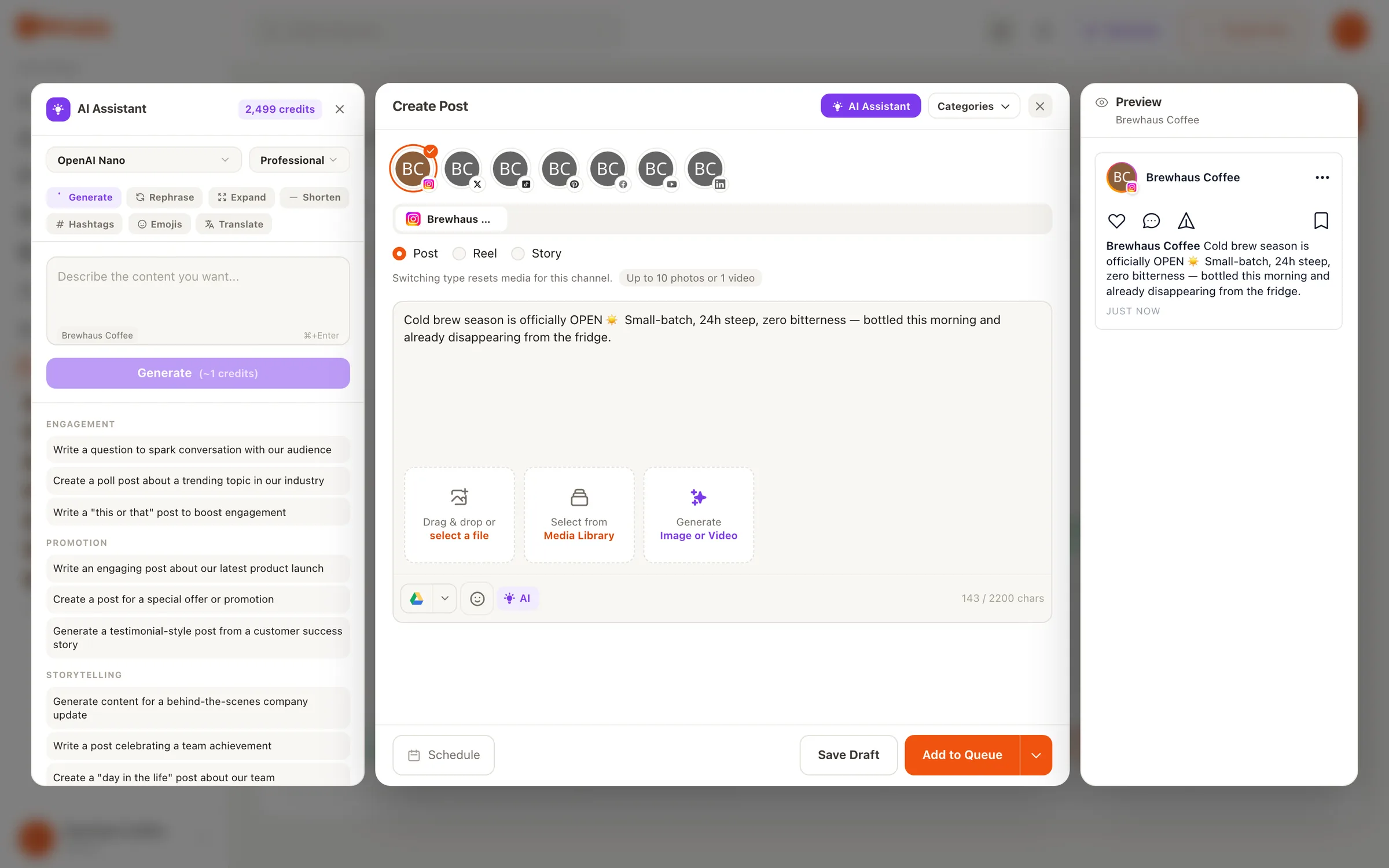
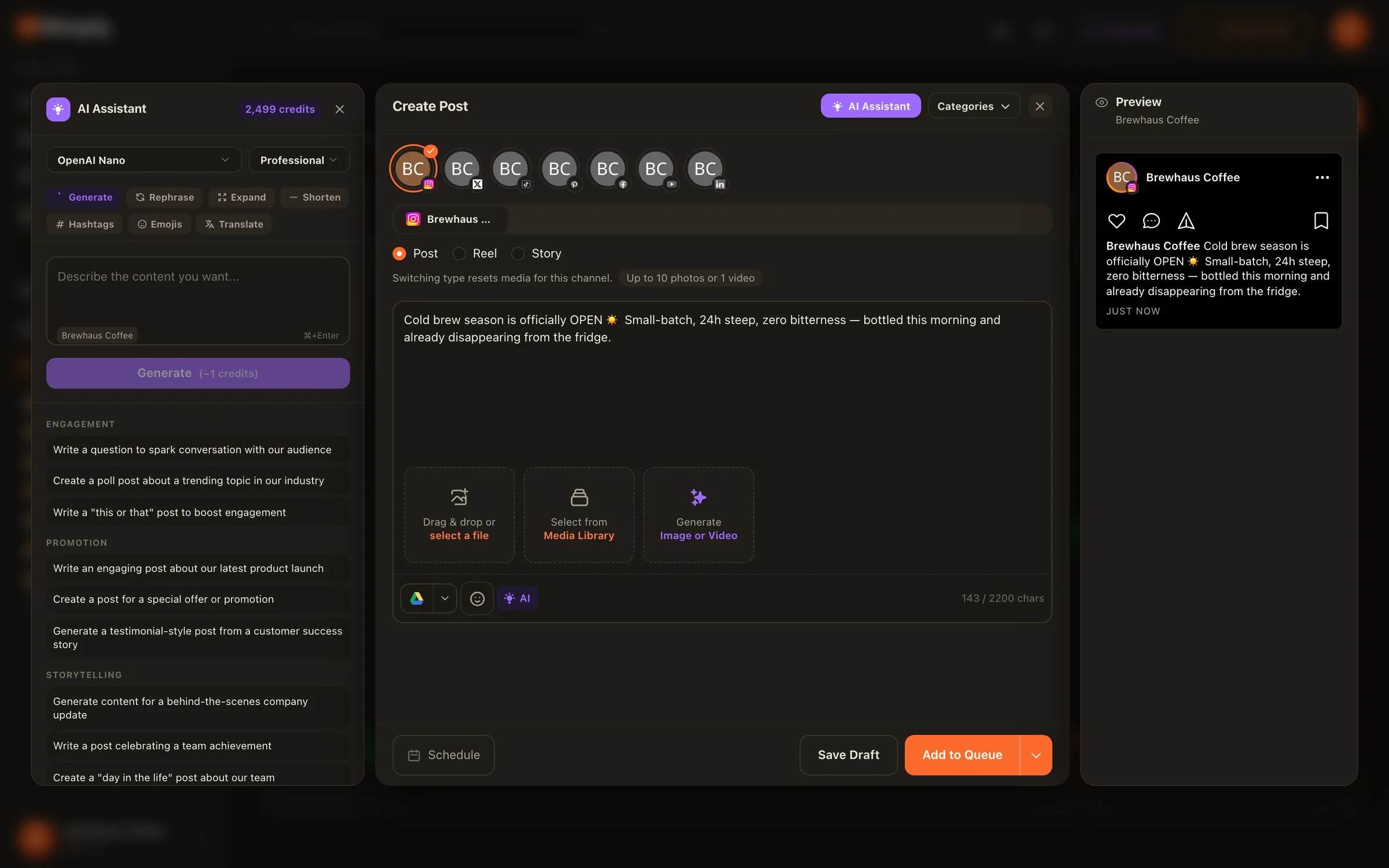
The rail that makes it safe
Nothing posts itself. Ever.
A dental practice can’t wing it publicly — no clinical claims, no patient details, no oops. So Nimply’s agents are structurally unable to publish directly: they draft, the draft waits in your approval queue, and only after you or your office manager signs off does it get scheduled. The AI does the writing; the practice keeps the judgment.
That’s also the honest boundary on privacy: Nimply works only with content you provide. It never touches patient records, and the approval rail means nothing reaches the feed that your own eyes haven’t cleared.
An illustration
A month at a two-chair practice
Picture a fictional two-dentist practice where the office manager owns social media in the gaps between check-ins. First Monday of the month, she spends forty minutes in the approval queue: the recycler has drafted refreshed versions of the sensitivity explainer and the flossing post that did well last spring, the Carousel Designer has a “5 whitening myths” draft in practice colors, and she adds two team photos from her phone. She approves, edits one caption, schedules the month.
Through the month, the support agent drafts replies to insurance and booking DMs; she approves them in seconds from the inbox. When someone messages about tooth pain, the agent doesn’t play dentist — it flags the thread, and a human calls back. Total hands-on time: a lunch break a week, not a marketing hire.
Dentists — common questions
Is this safe to use given HIPAA?
Nimply only works with content you put into it — captions, images, and the business profile you write. It has no connection to your practice-management system or patient records. The rule to run by is simple: no patient names, faces, or treatment details ever go into a post or reply without the written consent your own policies require, and nothing you don't type in can leak out.
Will the AI give dental advice in DMs?
No. The Customer Support Agent answers from the business profile you configure — hours, insurance you accept, parking, appointment steps. Clinical questions aren't in its lane: anything resembling advice gets escalated to your front desk instead of answered. And in draft-first mode, a human approves every single reply before it sends.
Does anything publish without our sign-off?
No. Agents on Nimply never publish directly — every post and carousel is drafted, waits for approval from you or your office manager, and only then gets scheduled. For a healthcare practice that rail isn't a nice-to-have; it's the whole reason delegating to AI is tenable.
We barely have time to think about this. How much work is it really?
The honest answer: a setup session to write your business profile and brand basics, then a recurring rhythm of approving drafts — most practices can do that in one short sitting a week. The Evergreen Recycler and Carousel Designer generate the raw material; your job shrinks to editing and approving, which is much faster than writing.
Is the 40/25/20/15 mix a rule we have to follow?
No — it's a starting recipe, editorial guidance rather than data. It encodes one real principle: feeds that are mostly useful and human get followed, feeds that are mostly promotional get muted. Start there, watch what your own audience responds to, and shift the ratios accordingly.
Which platforms can the DM agent cover?
The Customer Support Agent works on Facebook Pages and Instagram professional accounts today, with comment coverage on Facebook, Instagram, and YouTube. Inbox access is opt-in per channel, so you decide exactly which accounts it touches. Scheduling and publishing, meanwhile, cover all the major platforms from one calendar.
Be the practice patients already trust before they call
Start free, set the recipe, and approve a month of patient education in one sitting.